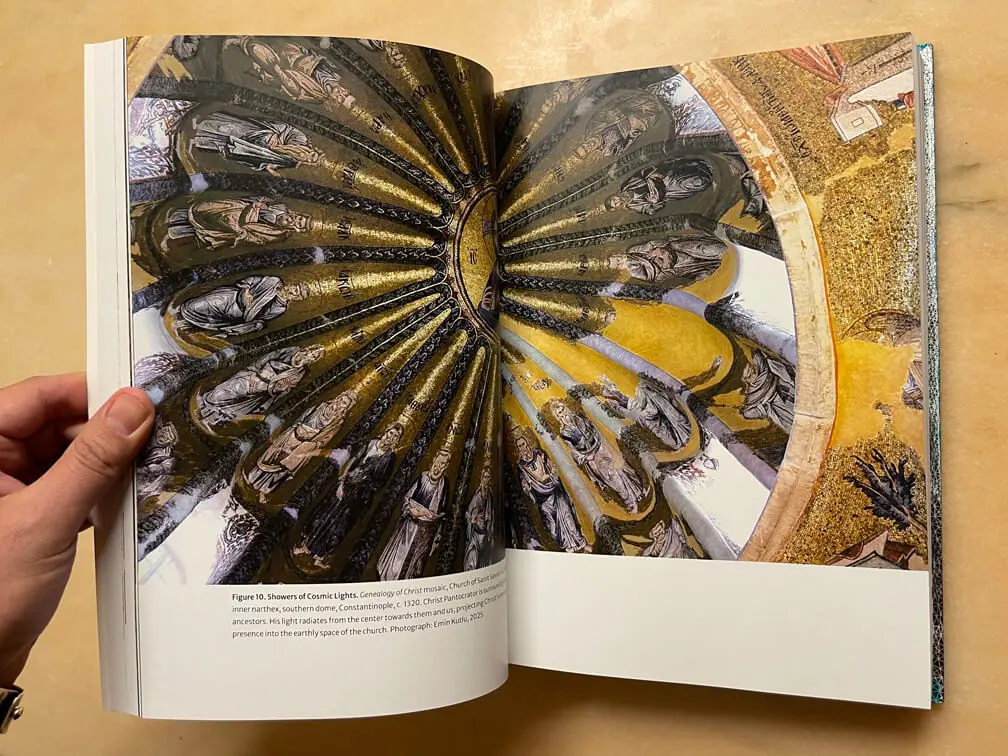
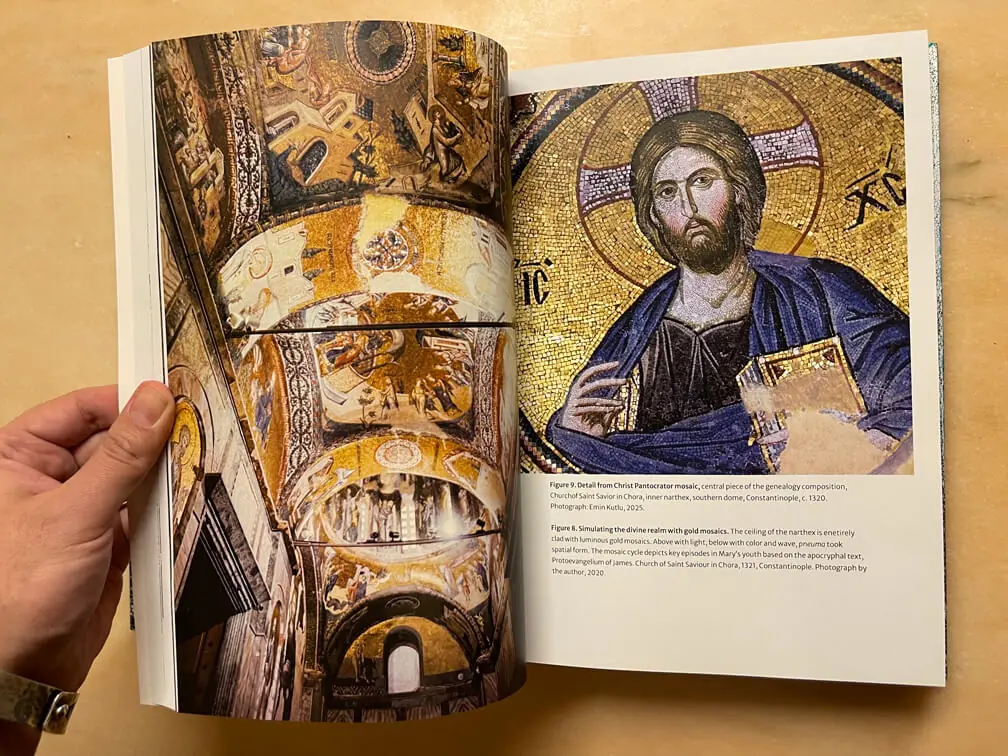
There was a time when the structure of the universe was imagined as a mosaic. In this alternative archaeology
of the
image, the history of the pixel does not begin with the computer screen, but on the floors of antiquity.
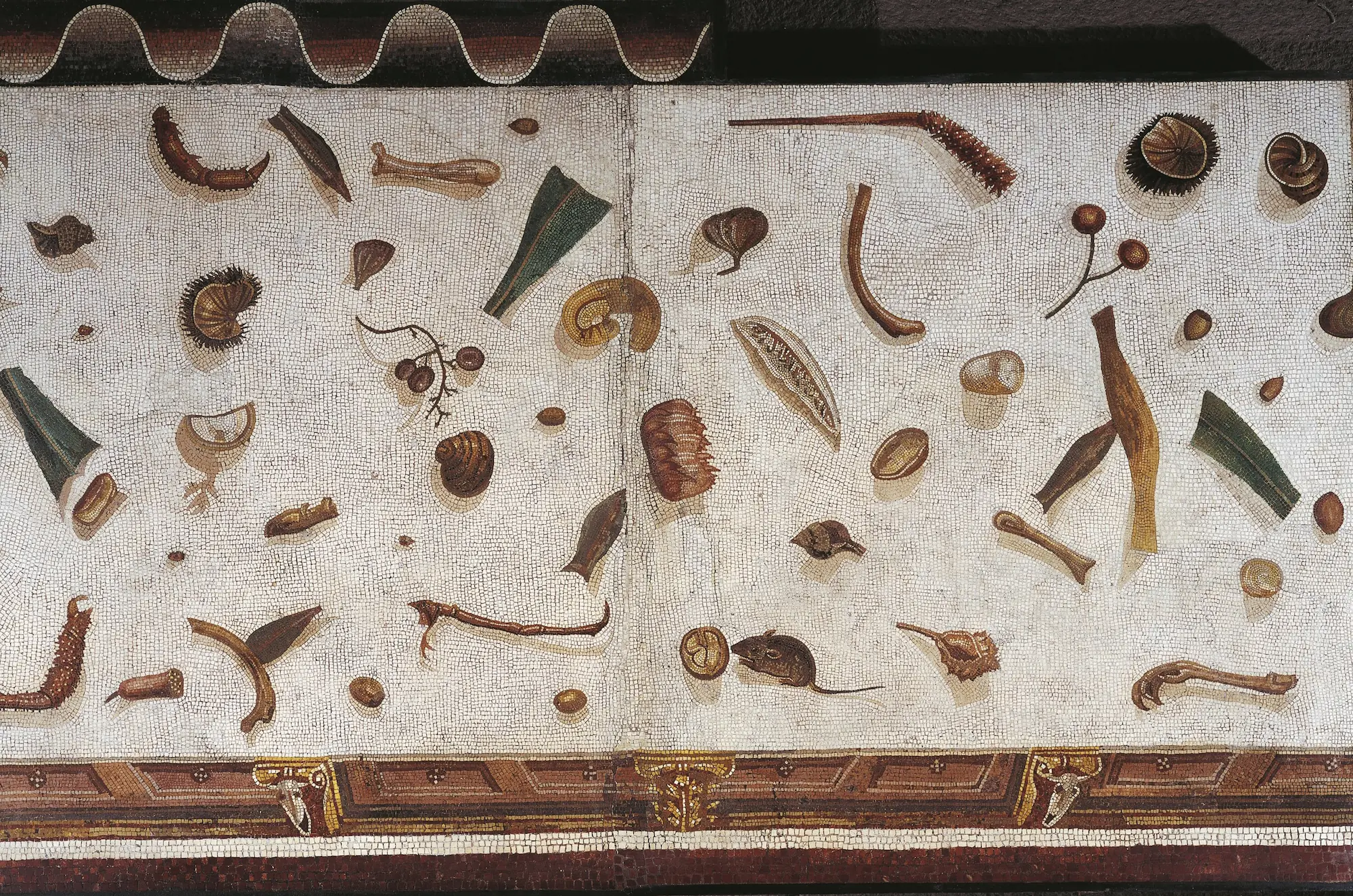
Unswept Floor Mosaic (asarotos oikos), originally decorating the
triclinium, the
dining room of a Roman house in Aquileia, Italy, 3rd–4th century CE. The mosaic depicts scattered food scraps,
shells,
and bones with a mouse feeding on the remains, rendered in trompe-l’œil. The motif derives from a
celebrated
Hellenistic mosaic attributed to Sosos of Pergamon (Turkey). Built from thousands of colored tesserae, these
works
functioned as artisanal simulations anticipating augmented reality. The digital image was not the first
disjointed
image. In Roman mosaics, the tessera already functioned as the pixel. Museo Gregoriano Profano, Vatican
Museums.
Photograph: Getty Images, published in Daily Sabah.
An Alternative Archaeology of the Pixel
For the ancient atomist, vision was a physical immersion into a cloud of swirling particles. As New
Antiquarians show,
the turbulent worldview of Lucretius strikingly resembles our own condition in the age of AI, more than
Plato’s and
Aristotle's models. Ancient mosaicists translated this atomistic vision into stone carpets. In the Roman
villas of
Carthage, a small snail unveils the true function of these mosaics: they were not merely decoration, but a
sophisticated
medium of simulation. Built from discrete, assembled units, these mosaics act as proto-digital media,
producing earliest
historical forms of augmented reality.
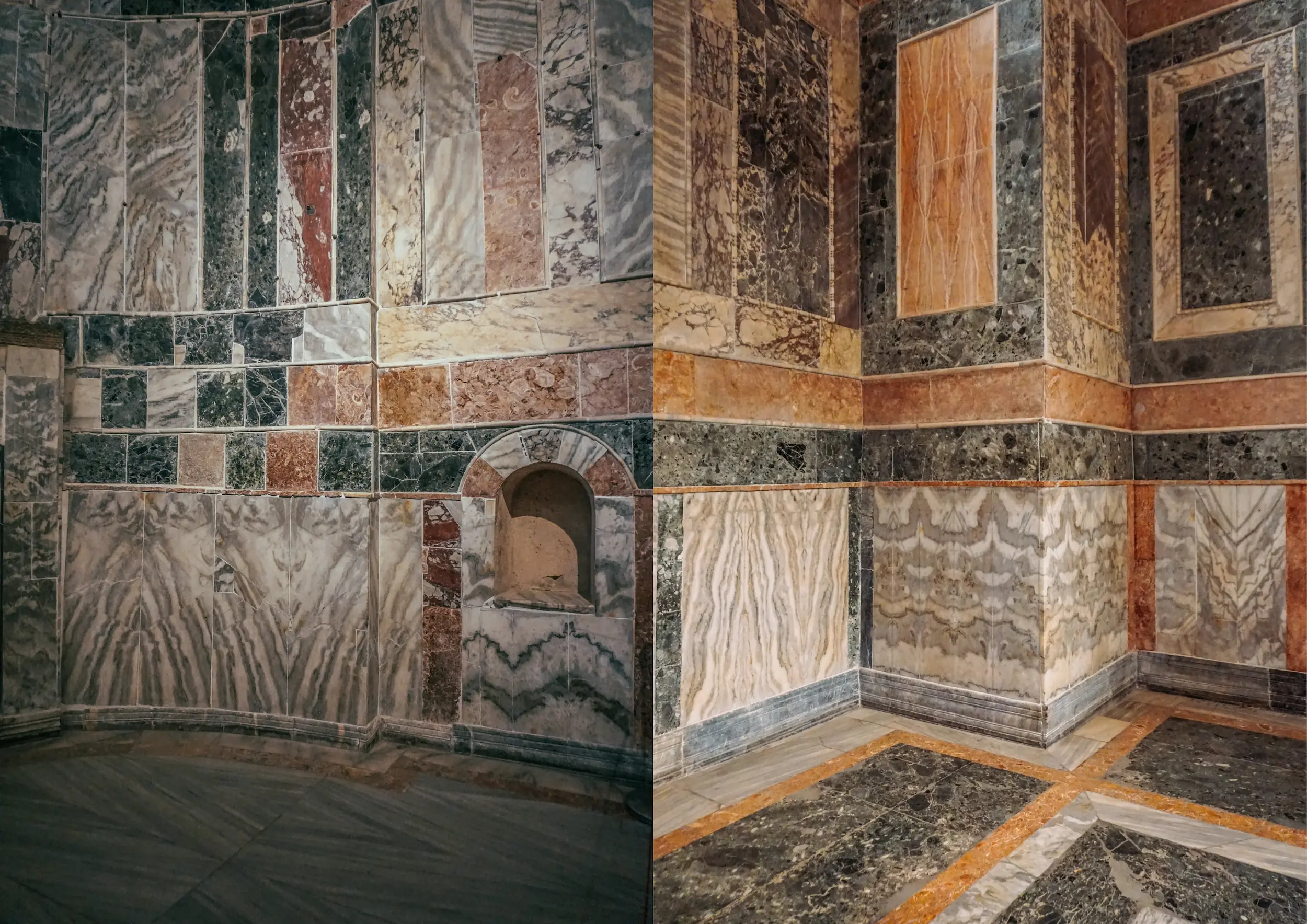
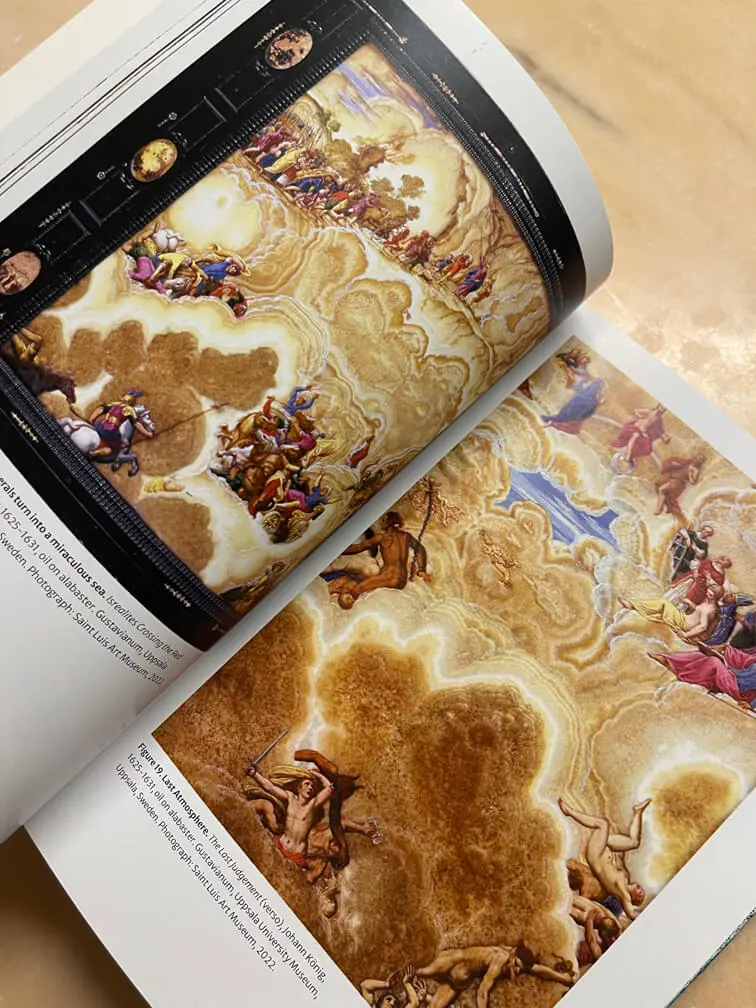
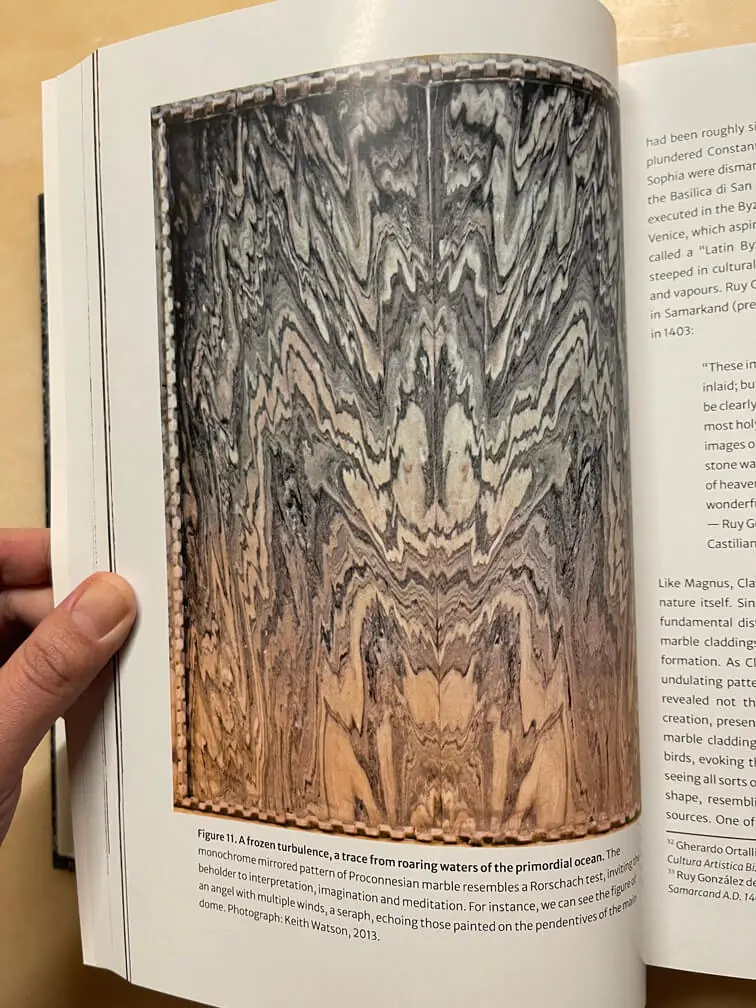
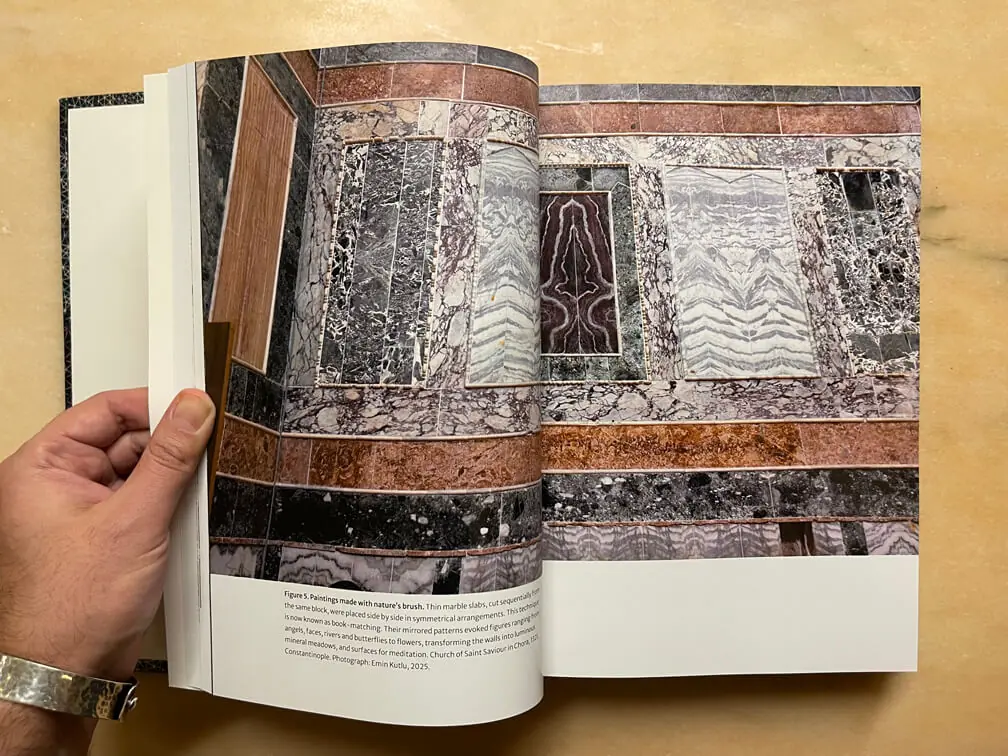
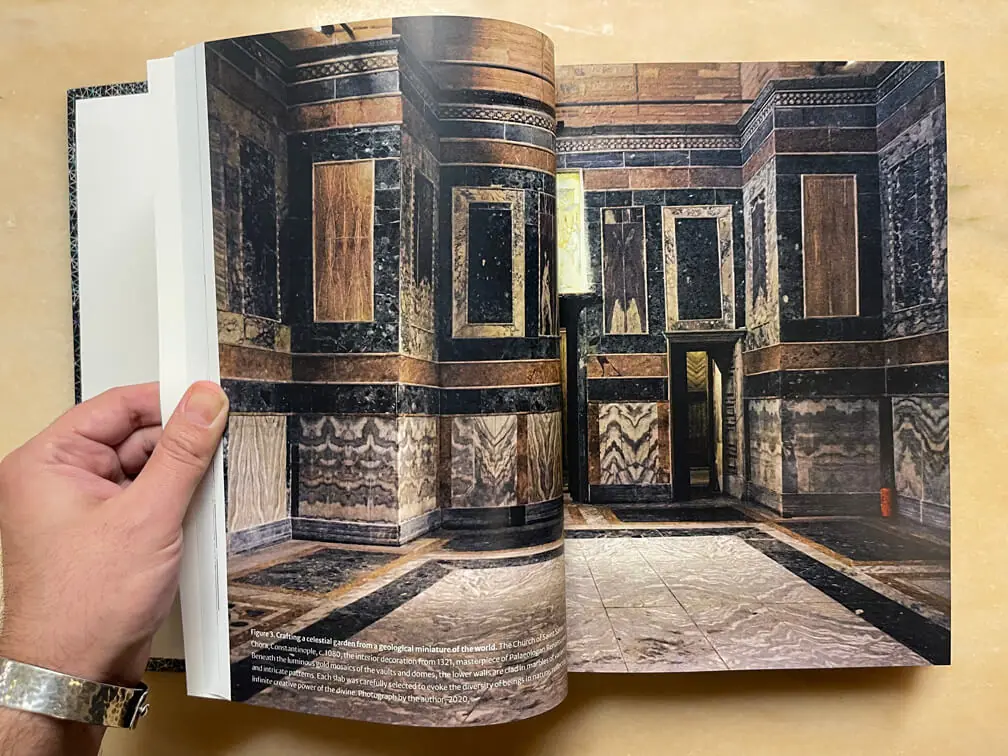
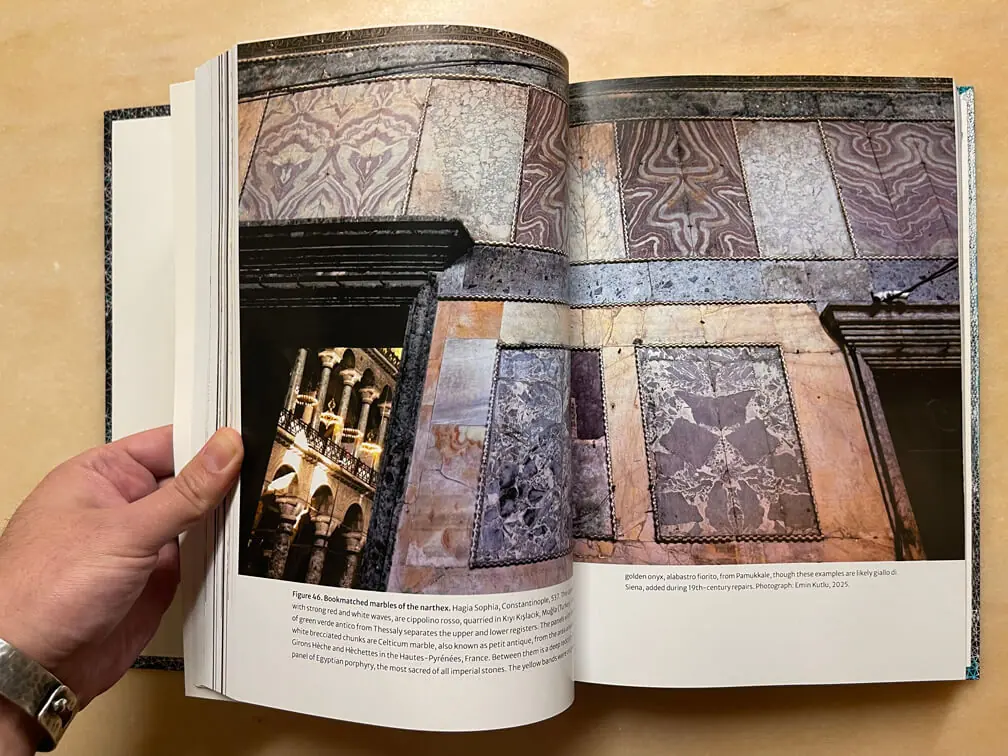
Diving into celestial oceans. Every vein was imagined as crystallized pneuma, each
wave a visible
trace of the winds of
creation, each glittering impurity a divine breath captured in stone. The marble cladding transformed the
church into a
cosmic simulation, returning the believer to the moment of creation and allowing them to walk as if upon the
waters of
the primordial ocean. Church of Saint Saviour in Chora, Byzantine period, 1321, Constantinople (Turkey). Two
assembled photographs by Mete Kutlu, 2020.
Crystallized Clouds
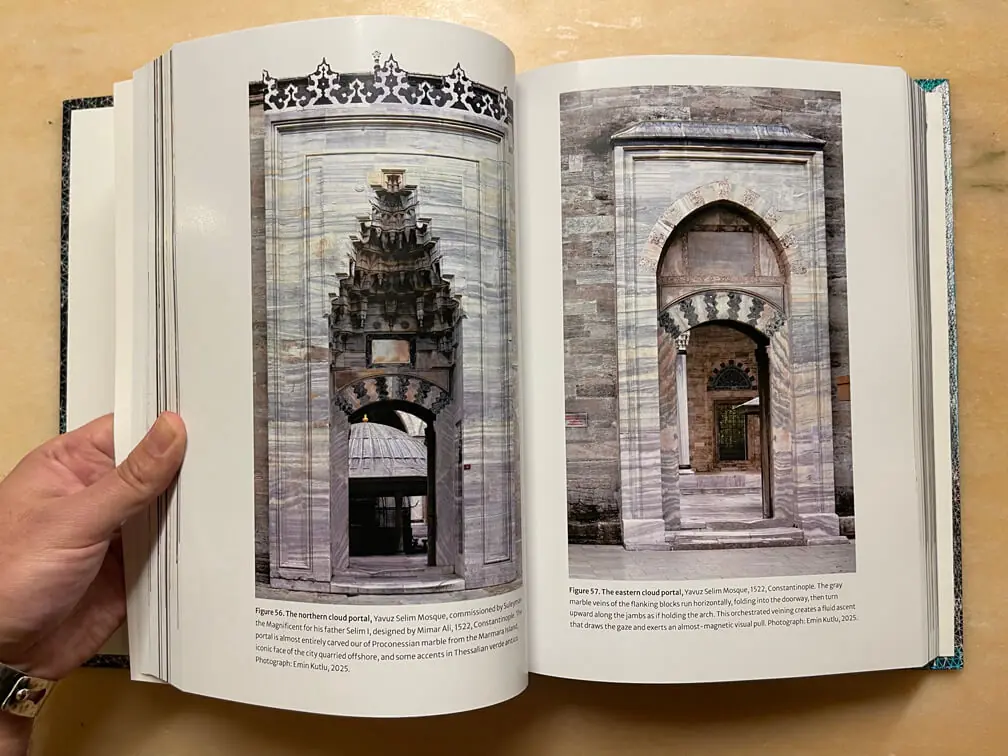
Architectural surfaces gave material form to the myths inhabited by the medieval eye. Byzantine and Ottoman
architects
discovered in veined marbles a material capable of simulating storms and winds. By selecting slabs for their
swirling
mineral patterns, they transformed massive buildings into polychrome atmospheres. In their hands, marble
became a
crystallized cloud. Geology was translated into meteorology. Architecture captured the primordial storm, the
moment of
creation frozen inside the earth.
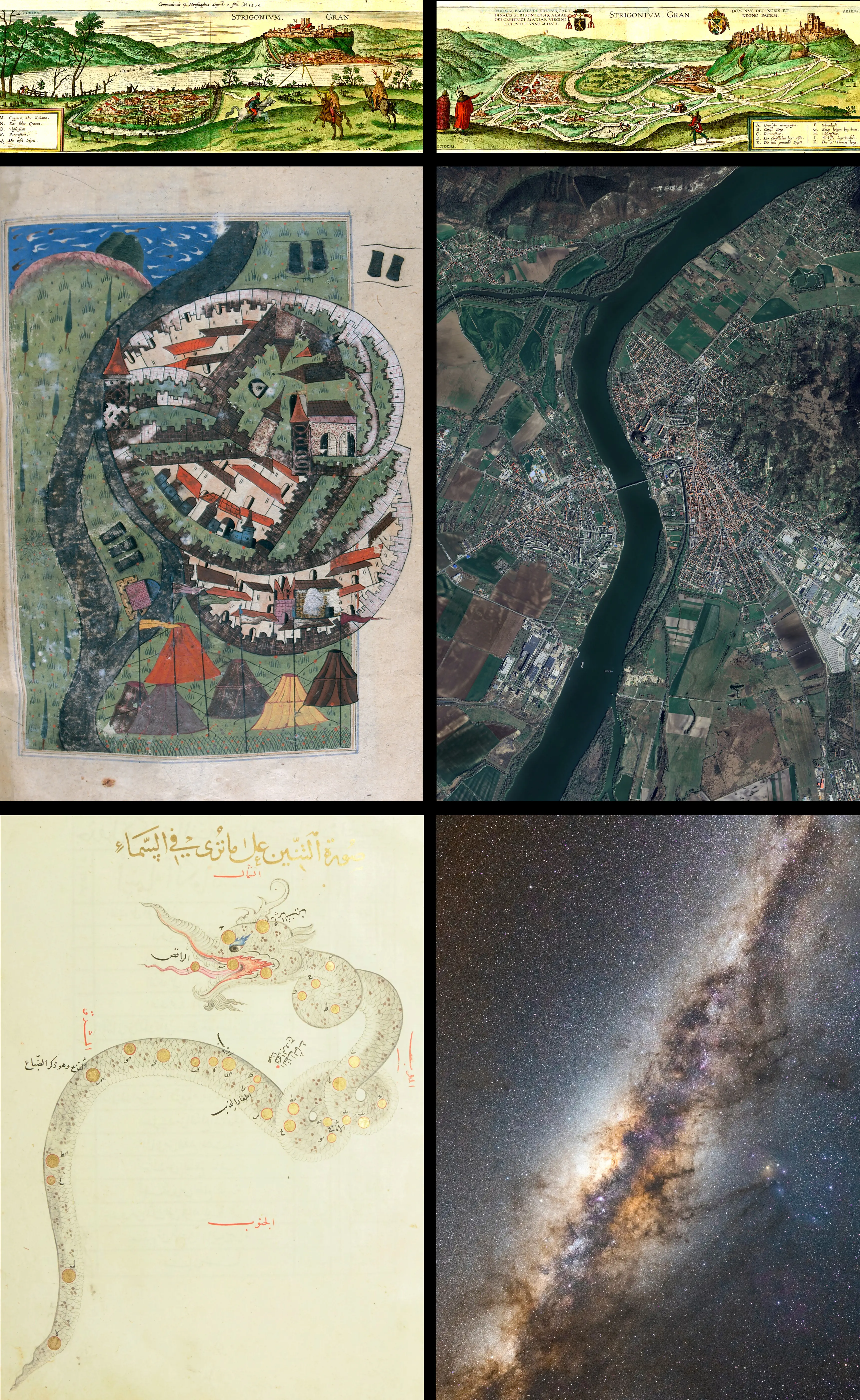
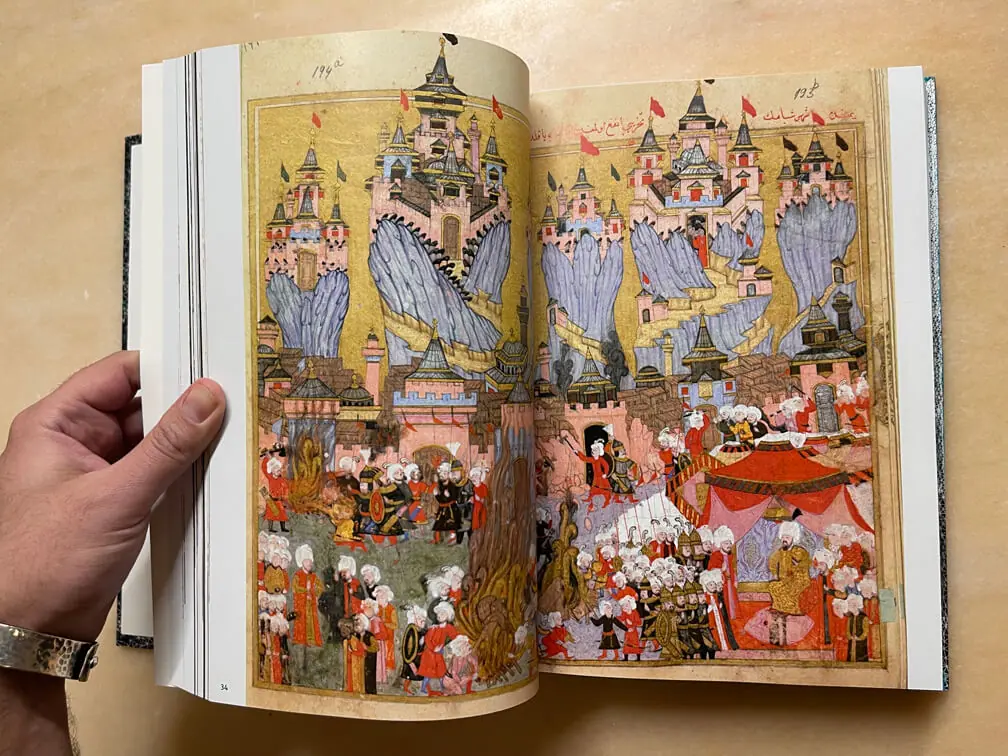
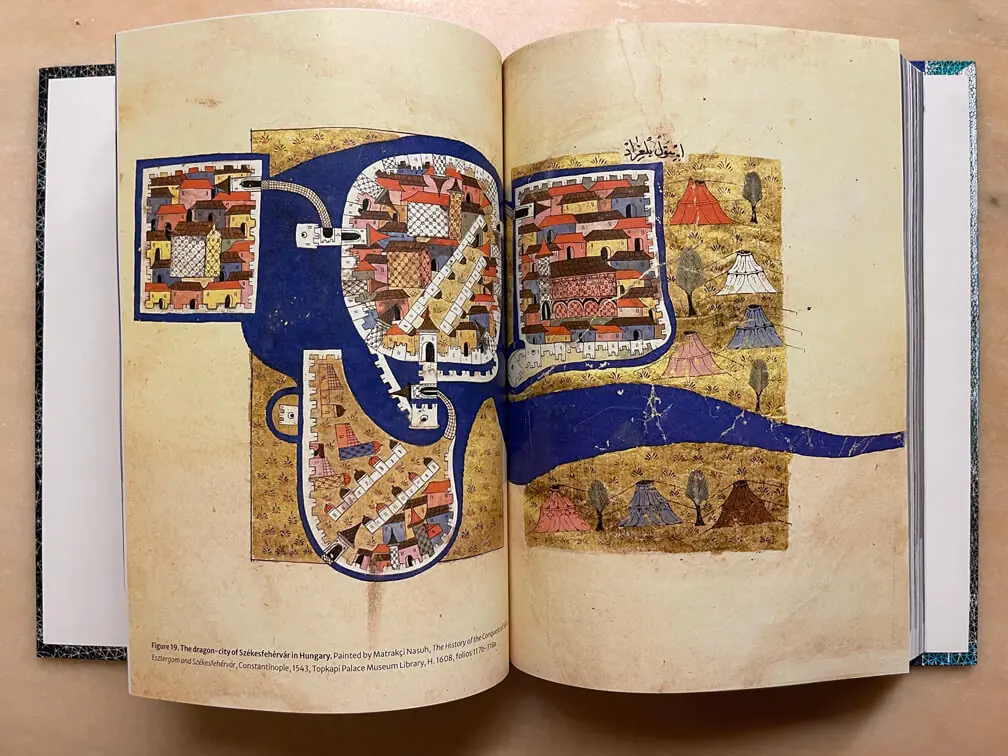
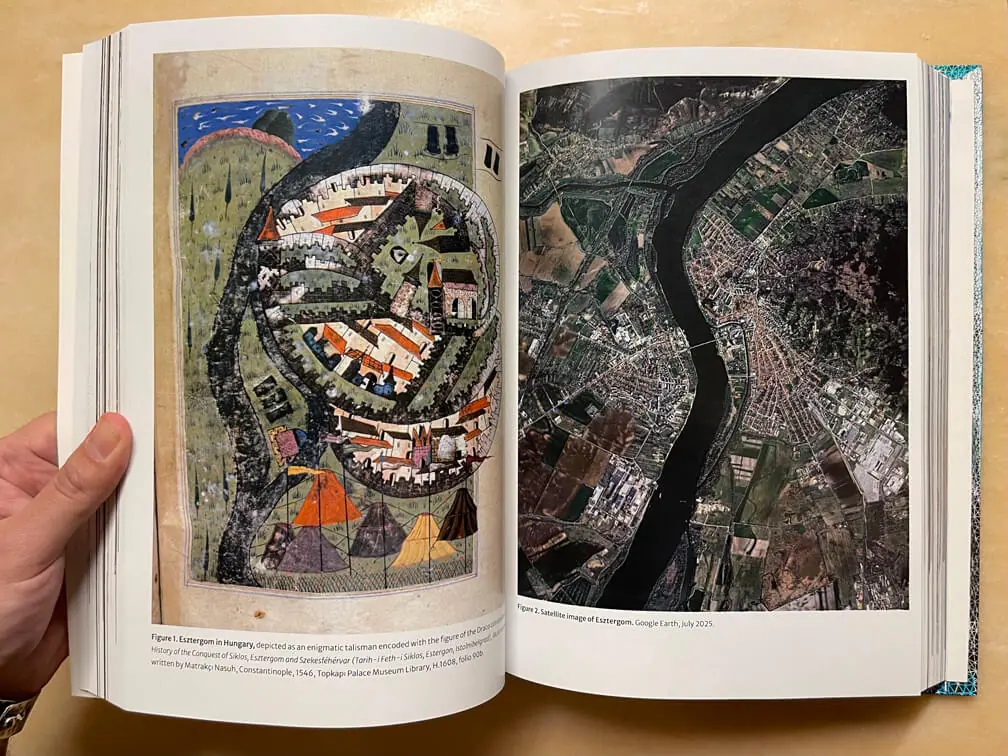
The city of Esztergom in Hungary seen through different eyes. At the top,
Renaissance bird’s-eye
views engraved by Frans
Hogenberg and published by Georg Braun in the atlas Civitates Orbis Terrarum (Cologne, 1595) depict
the city
through
perspectival landscape views structured by optical geometry and a distant observer. At center left, the
miniature by
Matrakçı Nasuh represents the city as an enigmatic talisman whose winding walls evoke the figure of the
Draco
constellation. History of the Conquest of Siklos, Esztergom and Szekesféhérvar (Tarih-i Feth-i
Siklos,
Estergon,
Istolnibelgrad), written and illustrated in Constantinople, 1546. Topkapı Palace Museum Library,
H.1608, fol.
90b. At
center right, a contemporary satellite image reveals a third regime of vision in which the city appears as a
landscape
recorded by orbital sensors and processed through digital cartographic systems. Google Earth, July 2025. The
bottom row
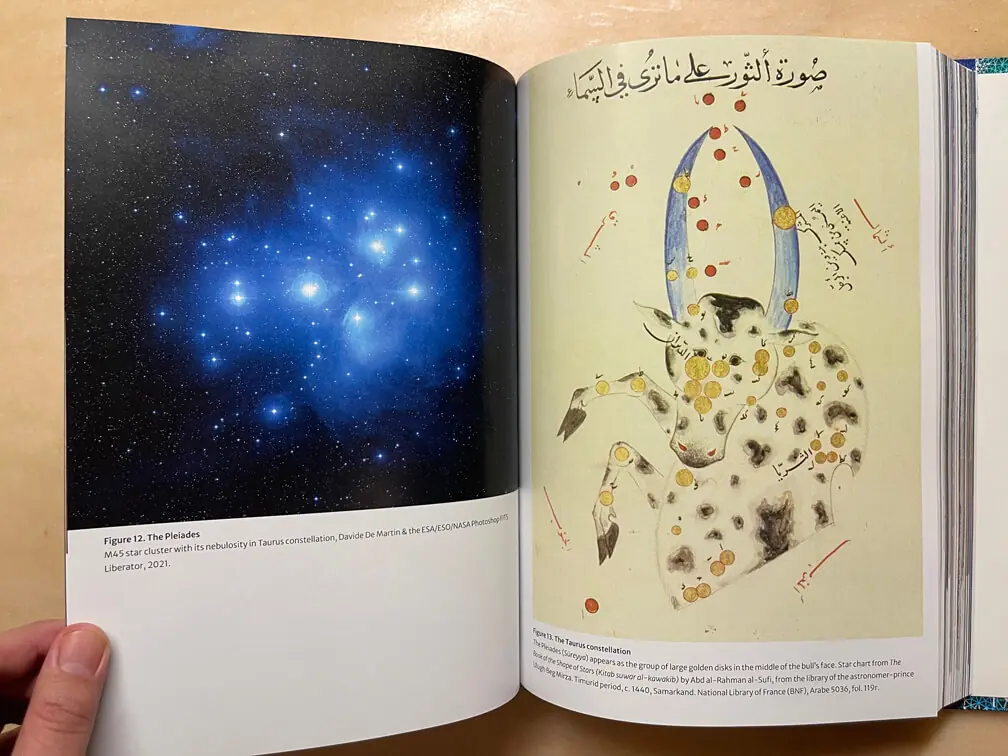
expands the comparison to the celestial scale. Left: Draco constellation, star chart from The Book of
the
Shape of Stars
(Kitab Suwar al-Kawakib) by Abd al-Rahman al-Sufi, manuscript from the library of Ulugh Beg,
Timurid period,
c. 1440,
Samarkand. Bibliothèque nationale de France, Arabe 5036, fol. 34v. Right: the Milky Way galaxy, horizontally
mirrored
photograph by Frankastro, 23 July 2022, composite of ten exposures of two minutes each taken with an EOS 5D
and Sigma
Art 24/35 lens.
A Cosmic Odyssey
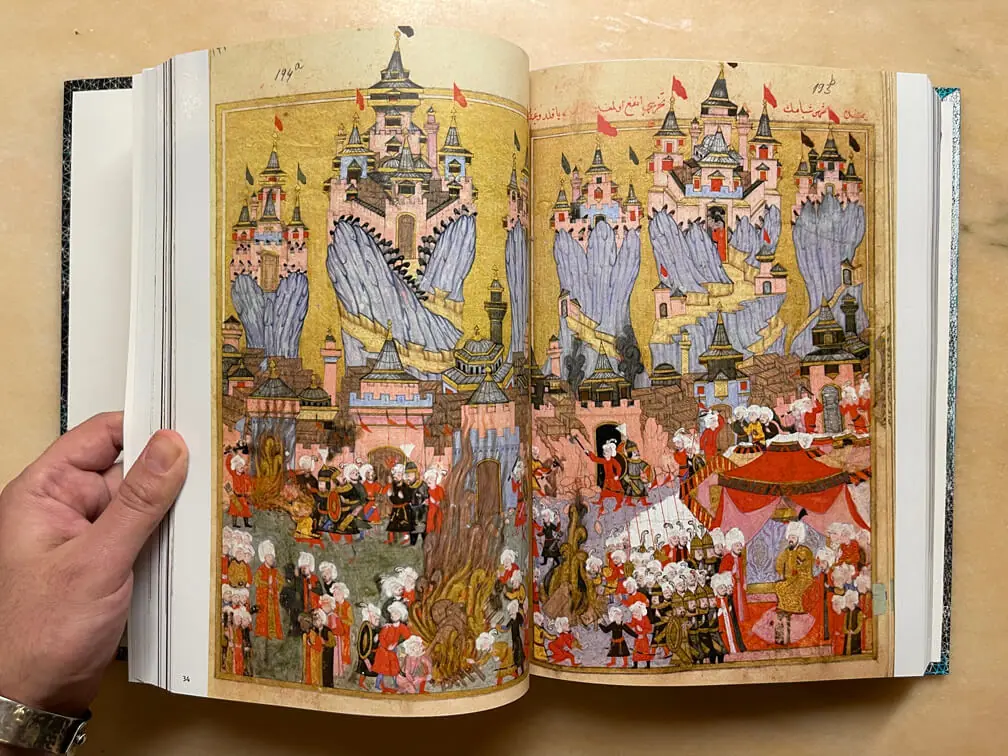
These urban myths were preserved in miniature paintings. To the Ottoman painter, a city was not just physical
reality,
but a whirling map of stars. In the chronicles of Sultan Süleyman’s campaigns, the conquest of Europe becomes
a cosmic
odyssey. Armies sail from one planetary orbit to another, conquering cities built atop the Milky Way. The
miniature was
an early media for augmented reality, materializing the invisible scripts that governed the Constantinopolitan
imagination.
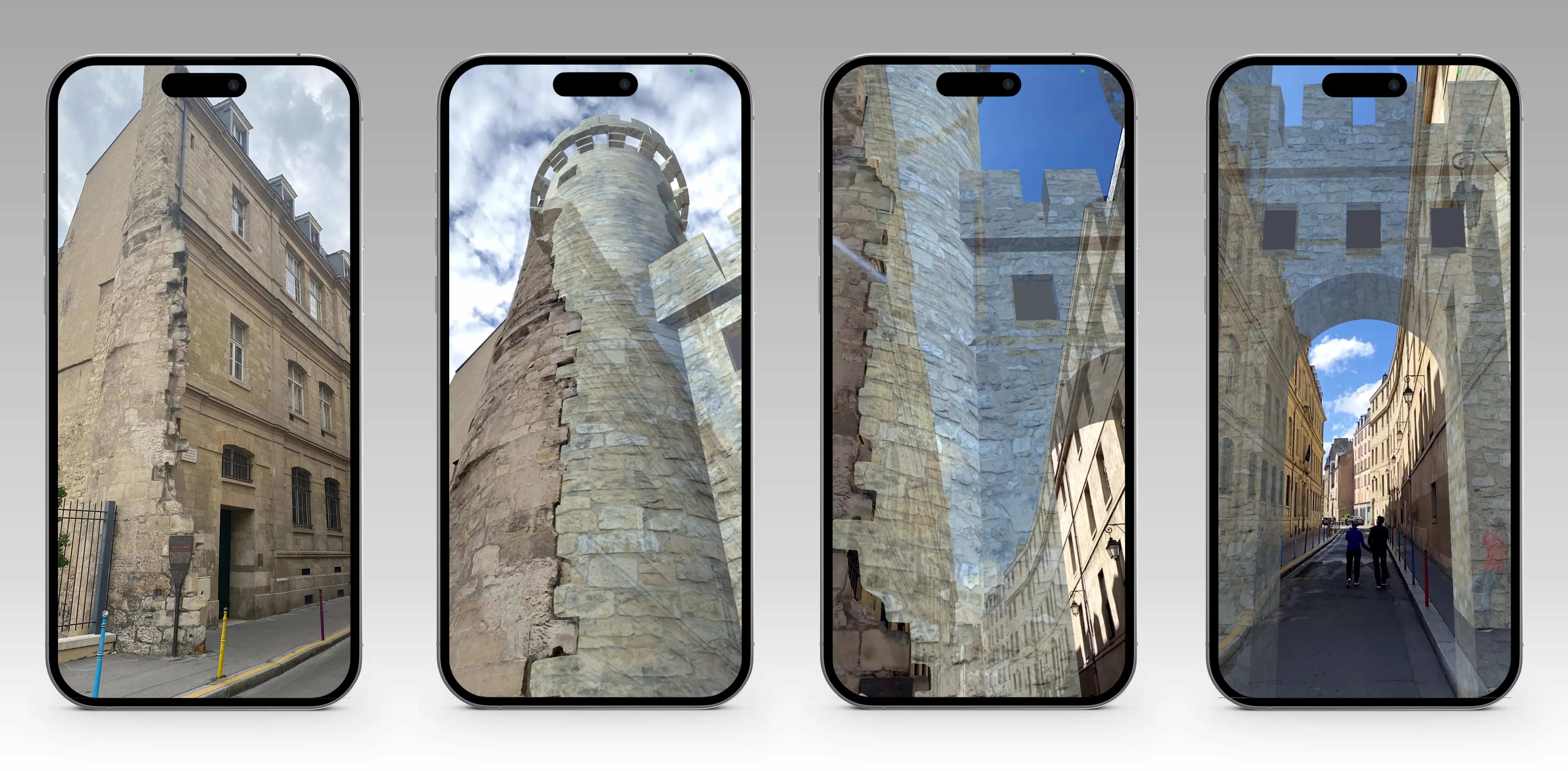
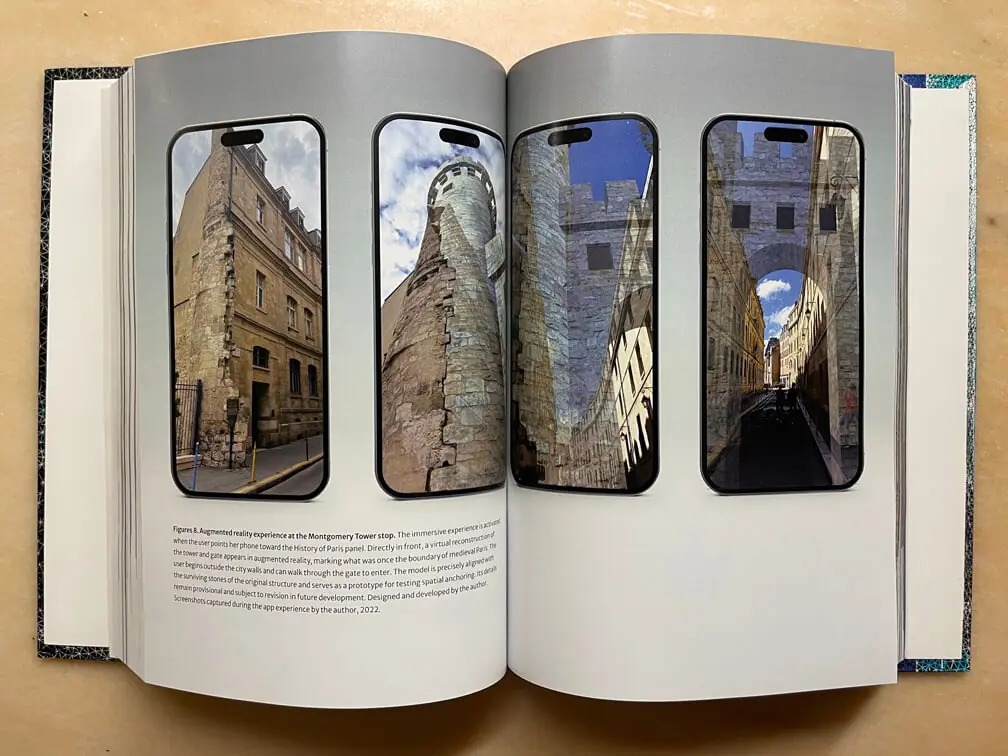
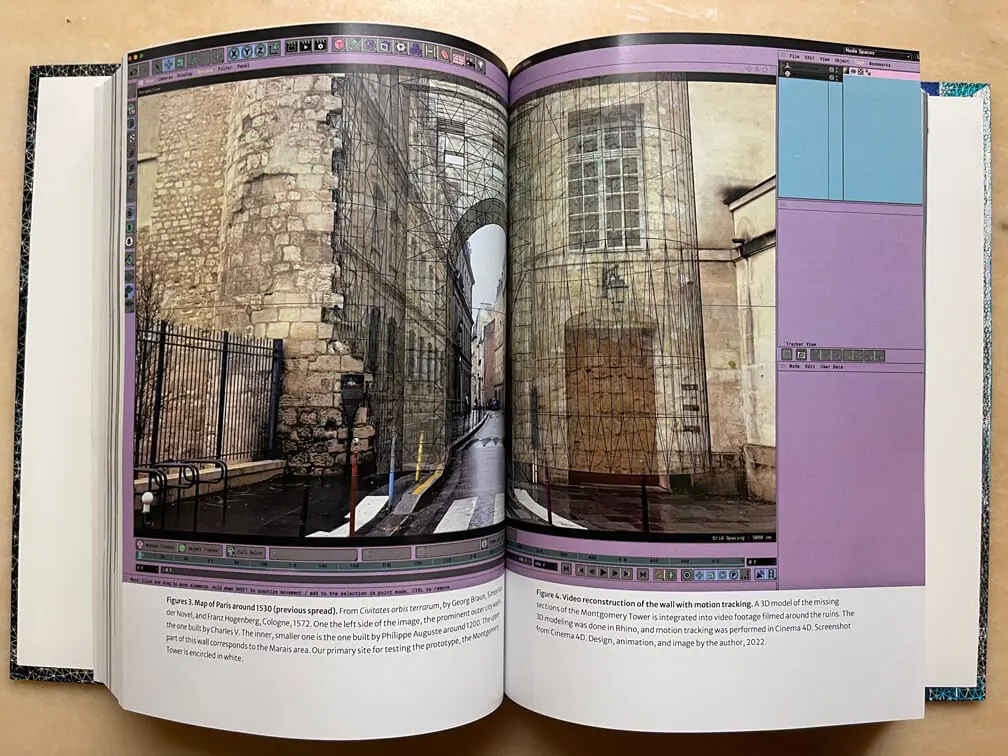
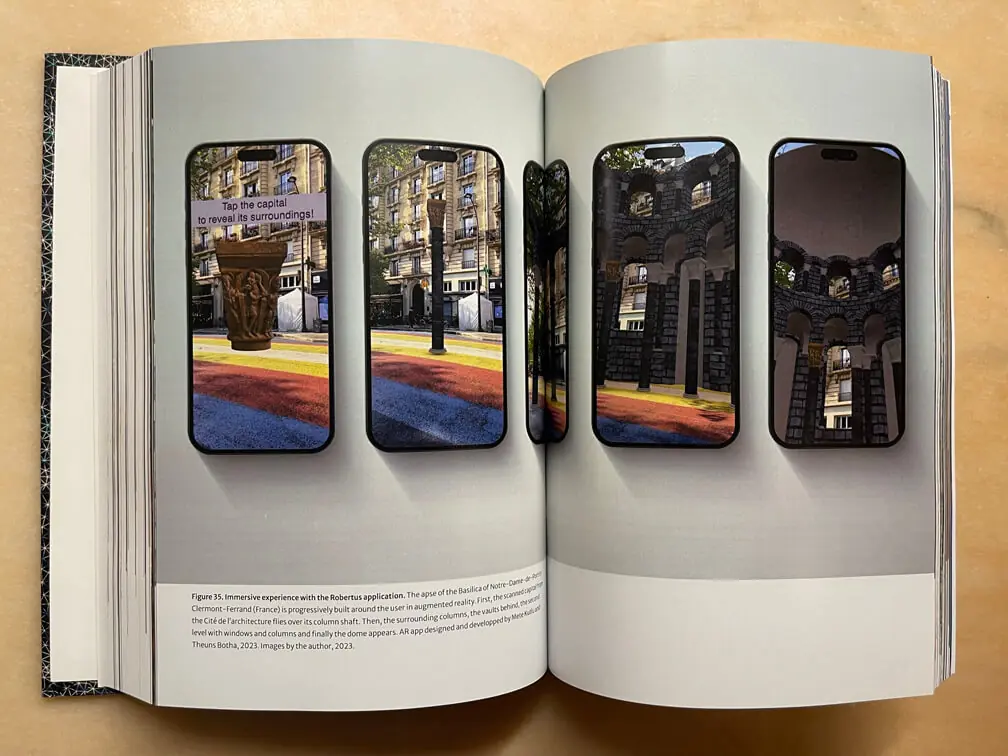
Immersive reconstruction of the Montgomery Tower of the Wall of Philippe Augustus,
Saint-Paul,
Paris. This augmented reality experience
reveals the medieval tower and gate
of the Wall of Philippe Augustus at the Montgomery Tower stop in Saint-Paul. When the user points the phone
toward the
surviving stones, a virtual reconstruction appears in place, allowing the viewer to walk through the gate and
re-enter
the city along the wall built under Philip II of France. The model is spatially aligned with the remaining
masonry and
serves as a prototype for testing architectural anchoring in augmented reality. Designed and developed by Mete
Kutlu.
Screenshots from the app experience, 2022.
The Augmented Flâneur
Today, augmented reality takes these imaginary cities off the paper and anchors them within our
three-dimensional
world. Urban space has become a cloud of spatial data; the city itself becomes the screen, a personalized
interface
where past and present coexist. As we walk along the virtual reconstruction of the medieval walls of Paris, we
transition from the traditional flâneur to the spatially extended cyborg. Navigating "mirror worlds,"
our
interaction
with the city is now mediated through data stored in the Cloud. This is our new tool for fabricating modern
urban myths,
placing gaze within gaze and layers of history within the palm of our hand.
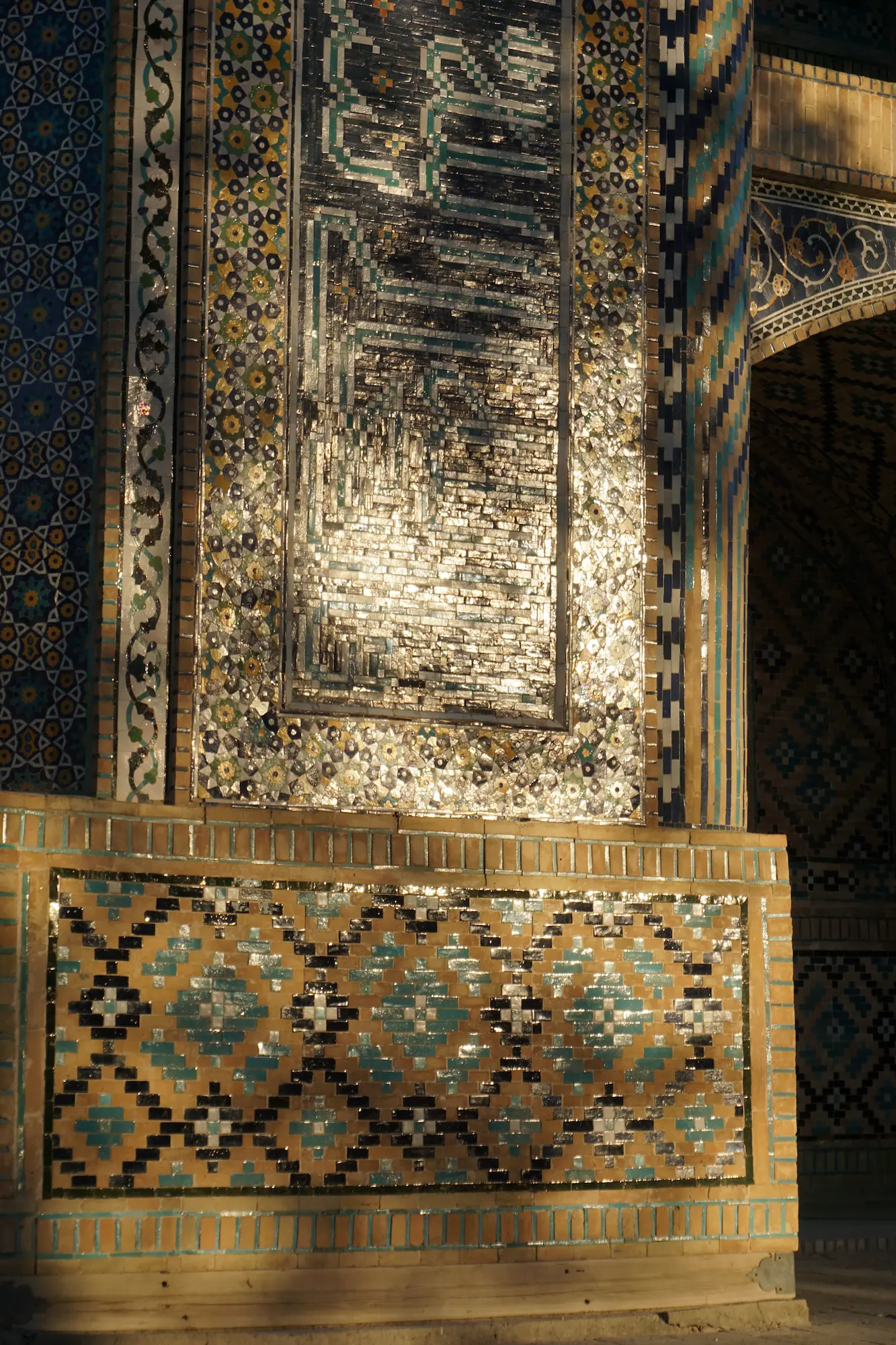
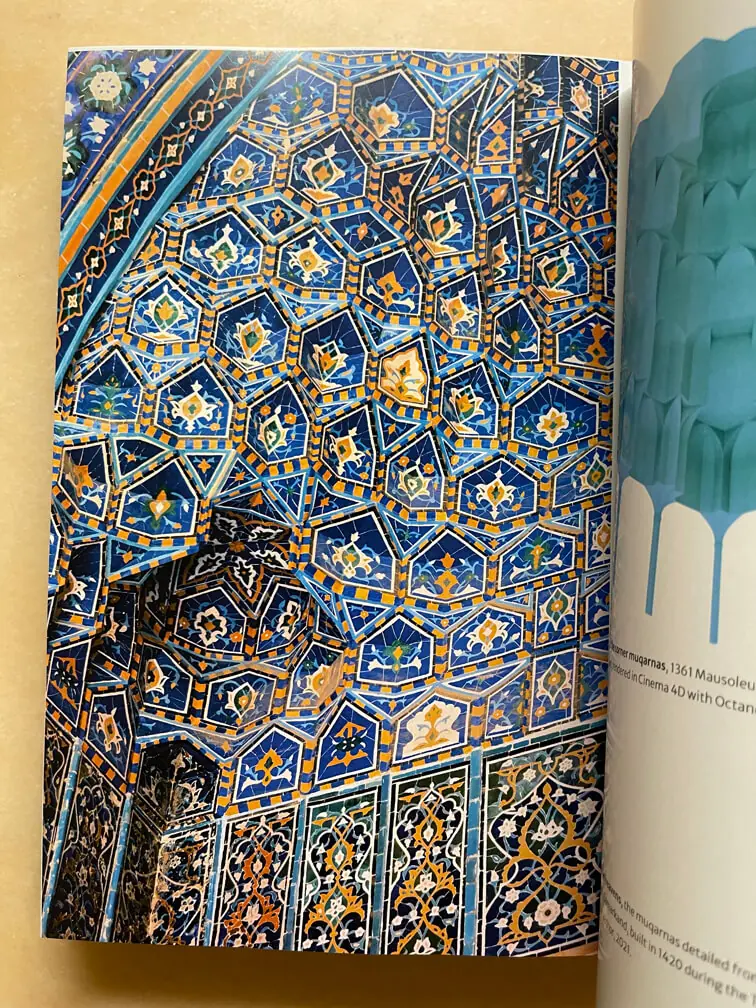
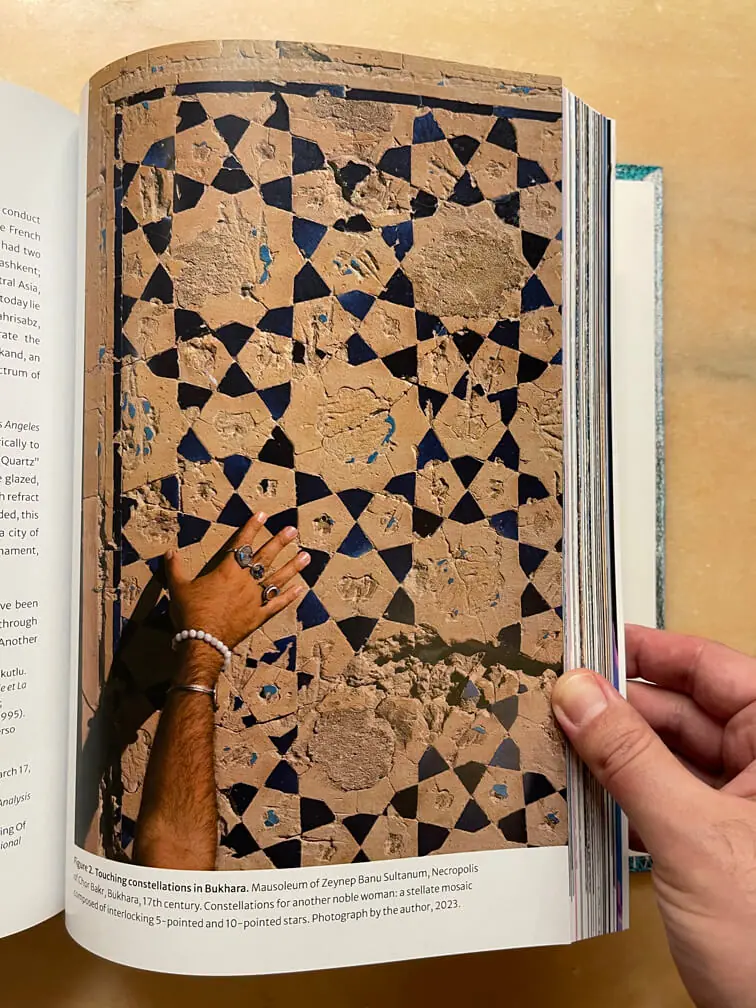
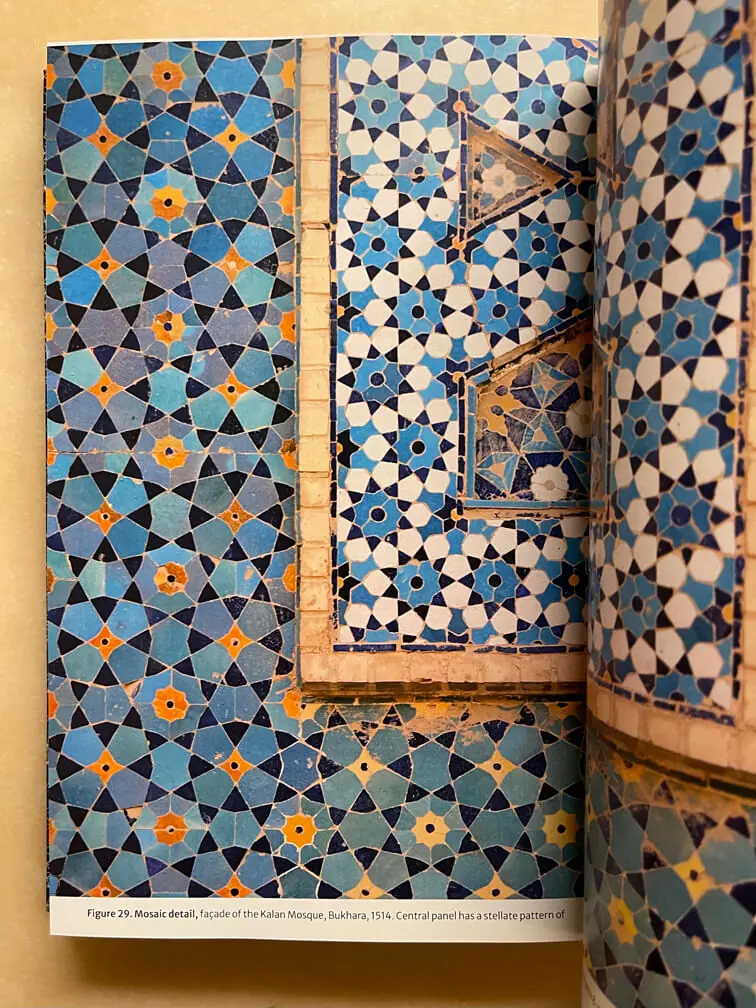
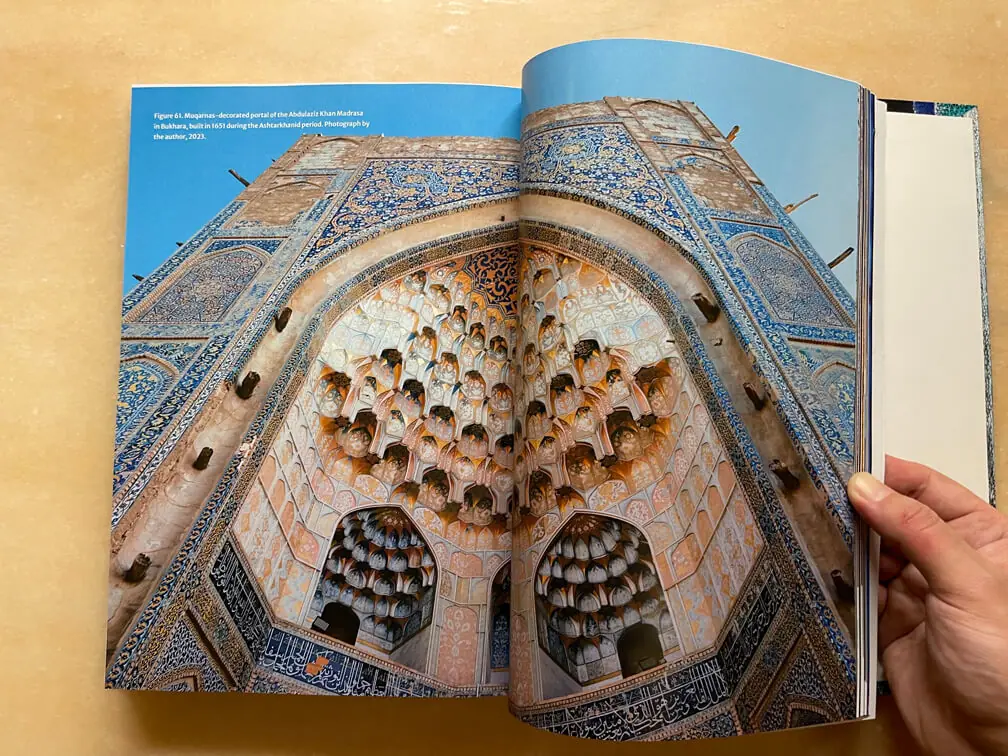
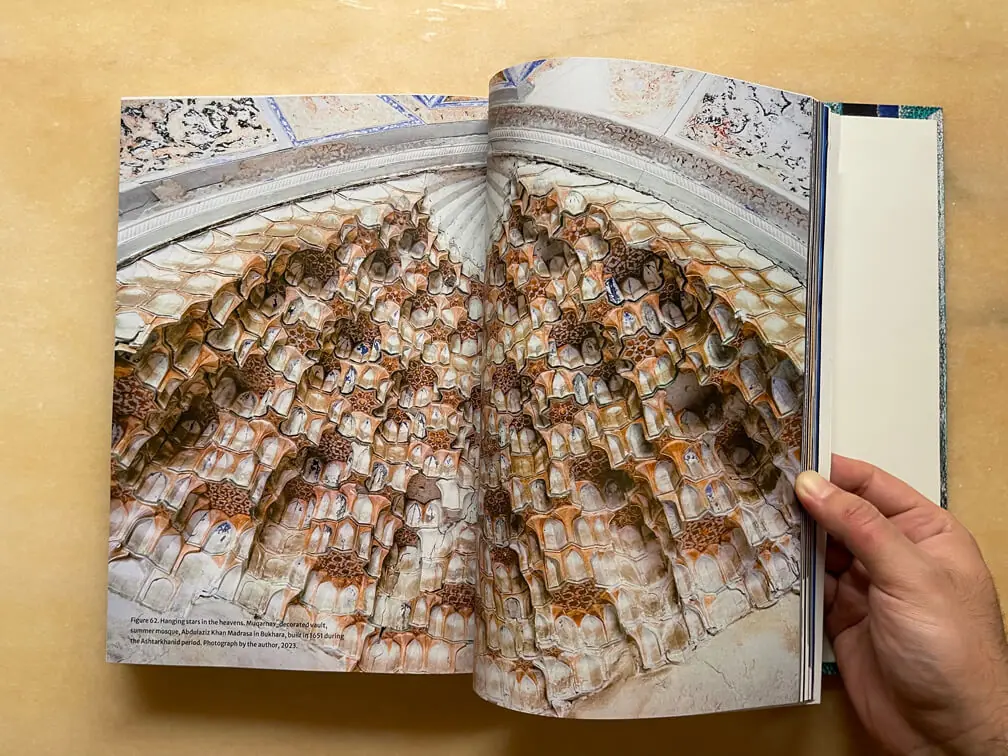
Quartz and the architecture of light. Along the Silk Road, monuments were assembled
from glazed
mosaic tiles made
with silica-rich pastes derived from crushed quartz. Combined with metallic oxides such as cobalt and copper,
these
materials produced deep blue, highly reflective surfaces that transform architecture into luminous structures
of light
rather than brick. In Samarkand and Bukhara, people felt as if not dwelling simply on Earth but among the
stars, in a cosmic and
mythic virtual world. Façade detail from the Nadir Divanbegi Madrasa, Bukhara (Uzbekistan), 1623, Janid
period. Photograph
by Mete Kutlu, 2021.
The City of Quartz
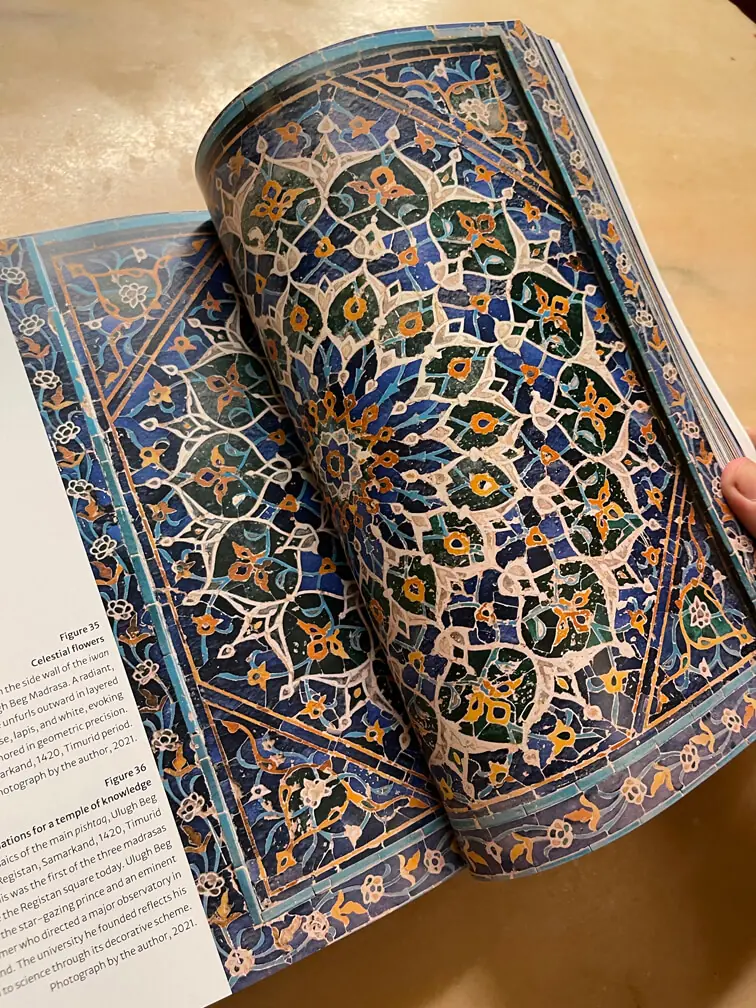
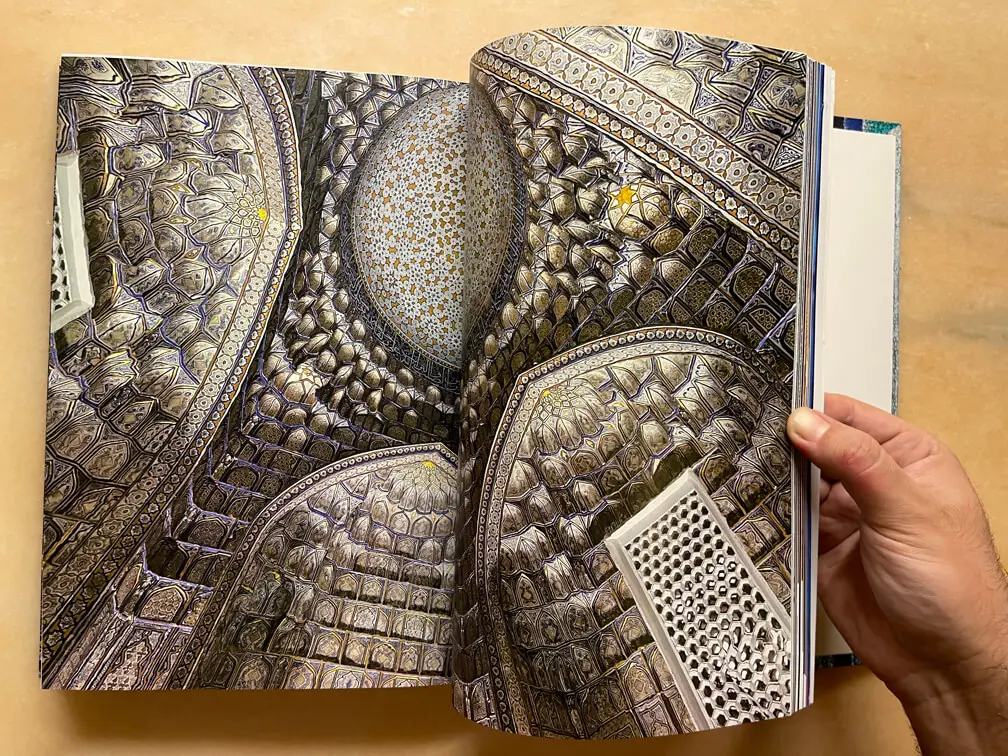
The narrative culminates in Samarkand (Uzbekistan), the legendary City of Quartz, the ancient capital of the
Silk Road. Along the 15th-century Silk Road,
cities were
networked information processing systems. Monuments were dressed in a layer of quartz crystals, covered with
luminous
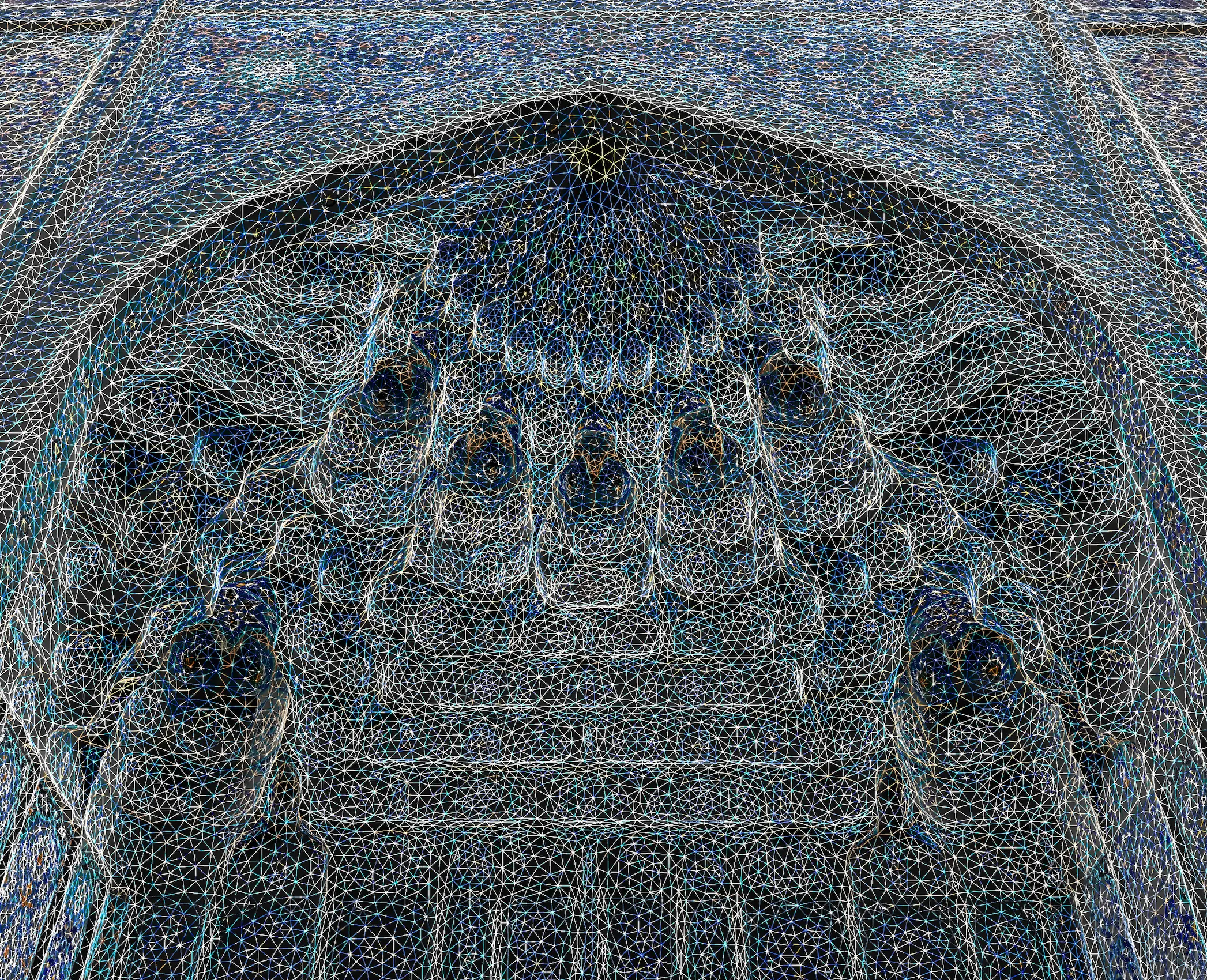
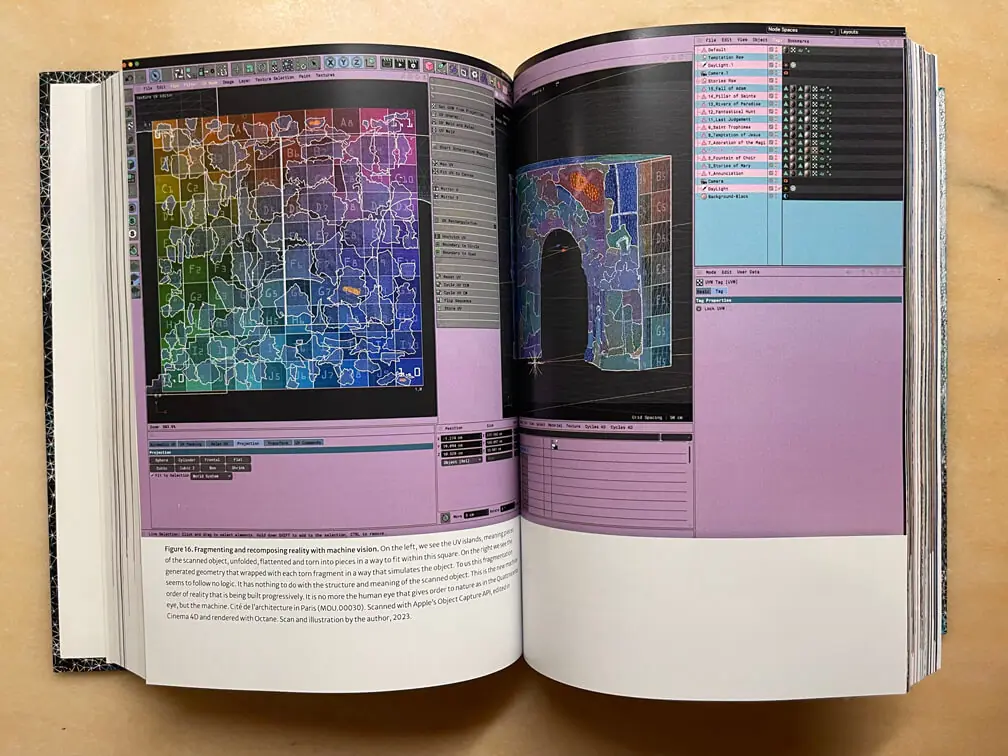
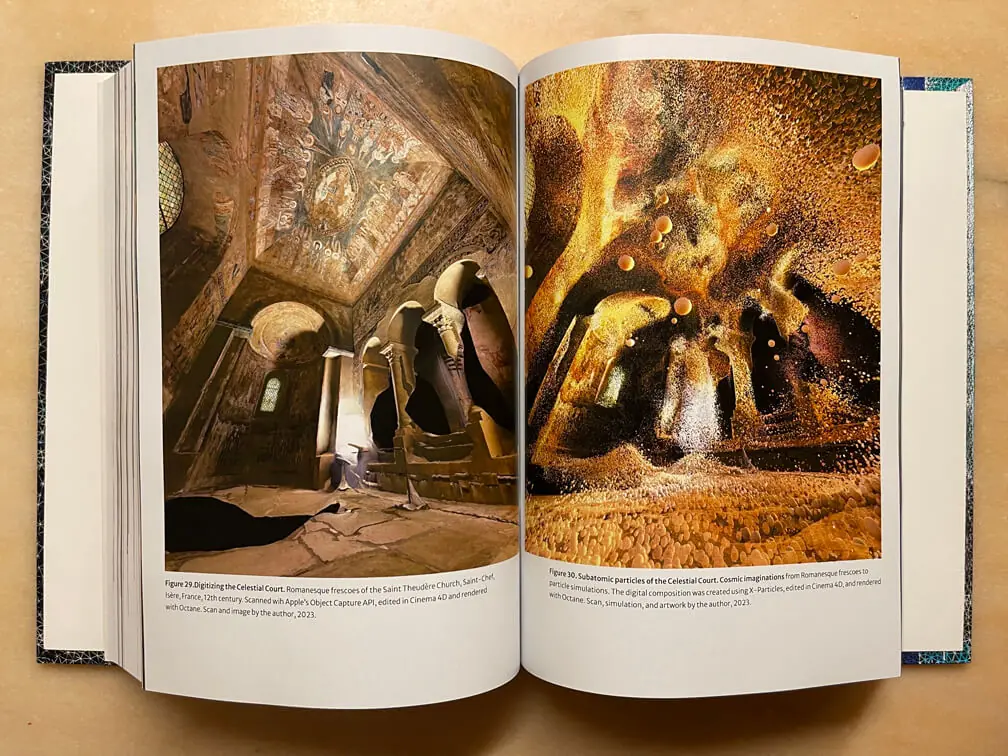
information circuits that gave the impression of an immaterial, virtual city. Through 3D scanning, these
mosaics are now
captured as digital meshes composed of millions of points. Here, we transition from one mosaic epistemology to
another.
Long before the silicon microchip, there was the silica tile. The same mineral foundation that produced the
shimmering
surfaces of Timurid architecture now underlies our computational hardware. The monuments of Samarkand are the
distant
ancestors of the digital matrix.
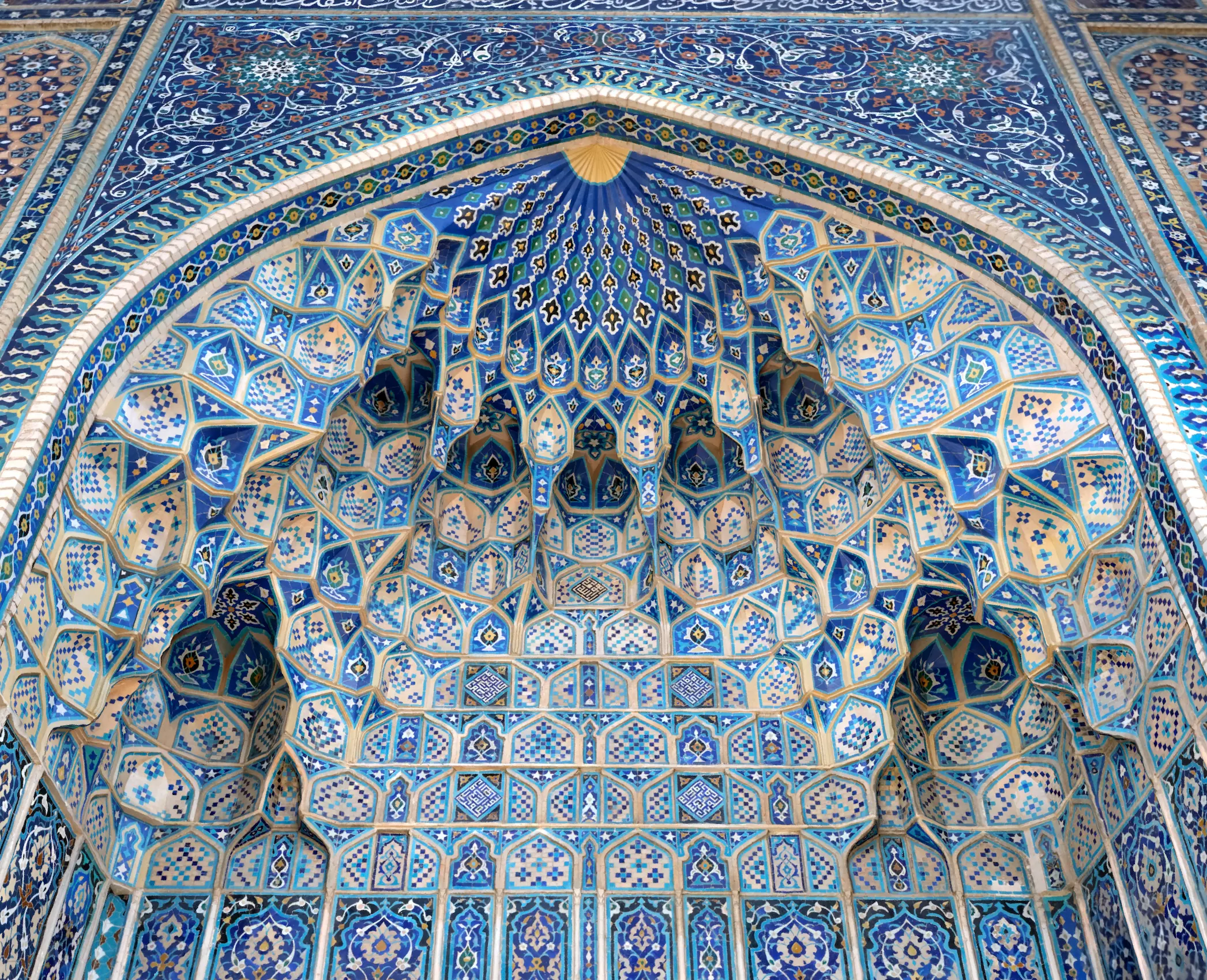
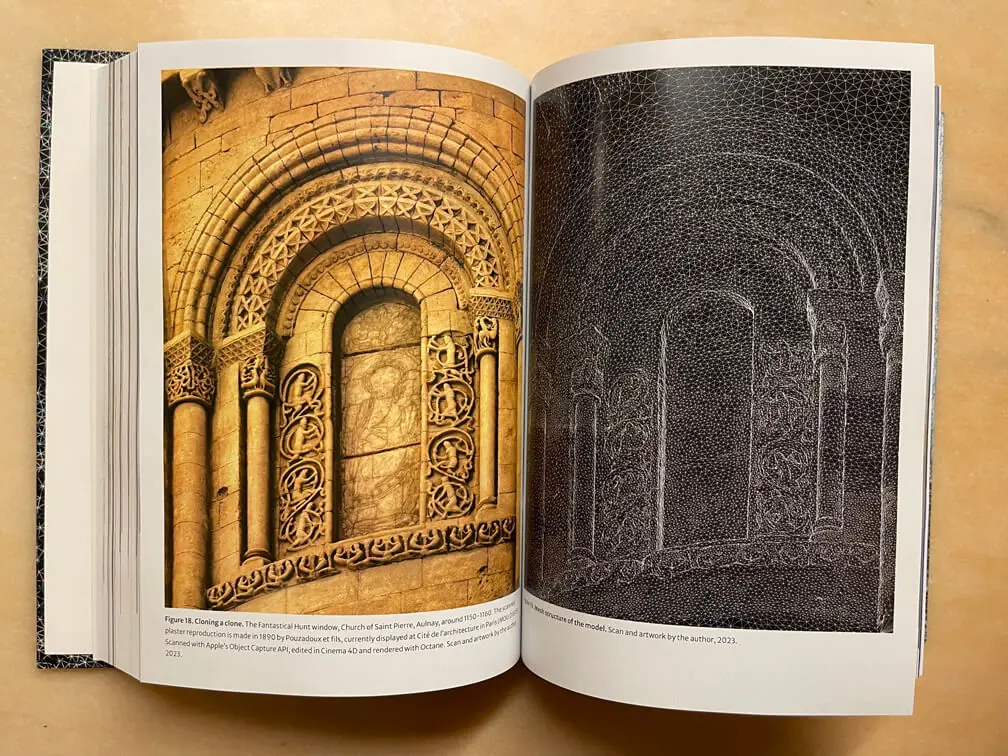
3D ScanMesh Structure
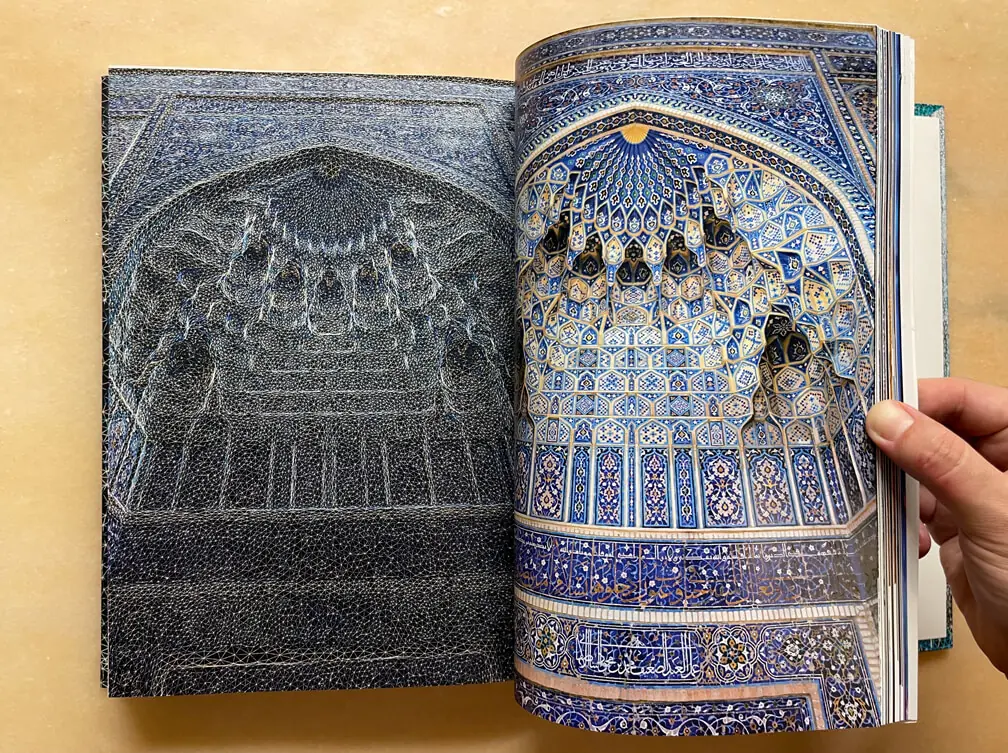
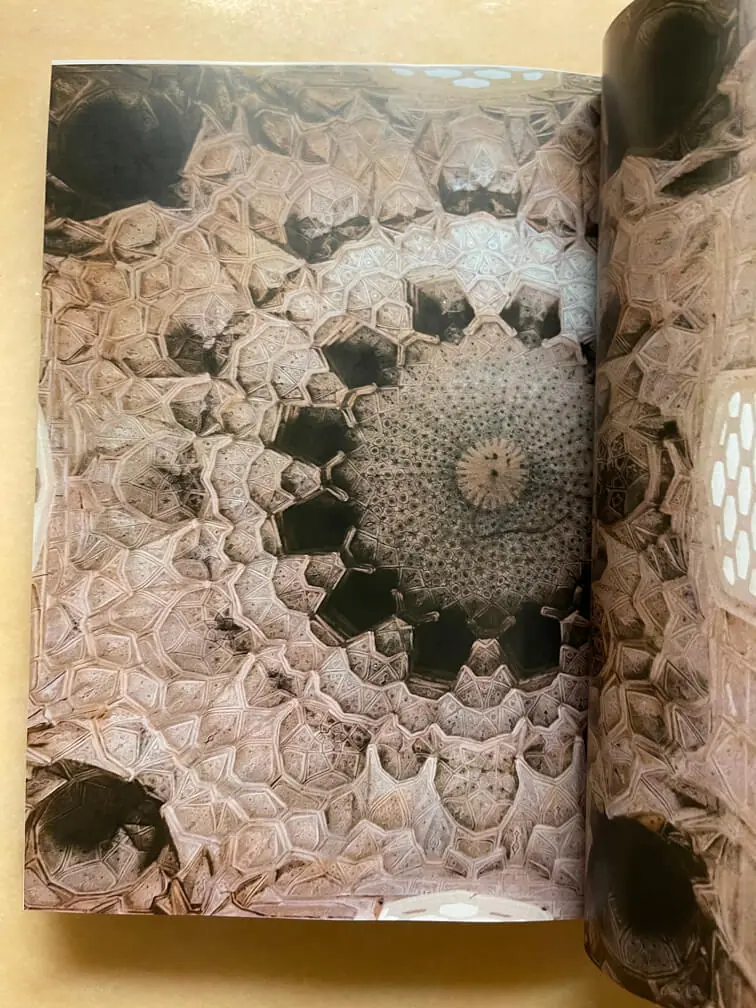
From artisanal mosaics to digital ones: the muqarnas of the Gur Amir Mausoleum. The portal niche
of the mausoleum
built
in 1403 in Samarkand (Uzbekistan) as the tomb of Timur features an intricate muqarnas vault composed of nested
cells, stellate
geometries, and glazed tilework. The slider reveals two regimes of representation: a photorealistic 3D scan of the
structure and the triangulated geometric mesh derived from it. Generated from 250 photographs taken on 10 October
2023
with a Fujifilm XT-3 camera, the model was processed using Apple’s Object Capture API, Cinema 4D, Octane, and
After
Effects. Scan and visualization by Mete Kutlu, 2024.
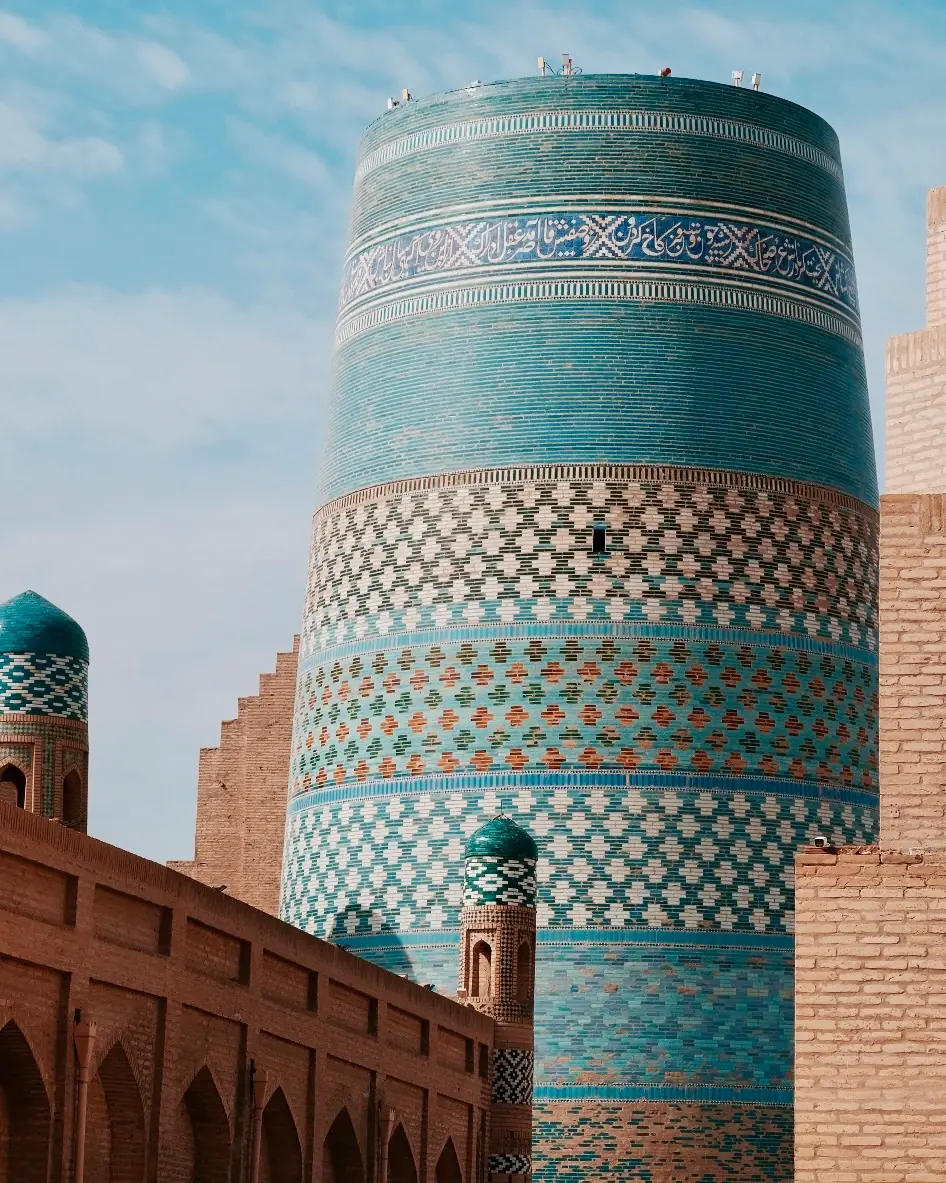
Kalta Minor, Itchan Kala, Khiva (Uzbekistan), 1855 (unfinished). Period of the Khiva
Khanate. Photograph
by Mete Kutlu,
2023.
Listen to an excerpt
A short reading fromChapter 21City as a Star Map
0:00 / 0:00
Scroll to reveal
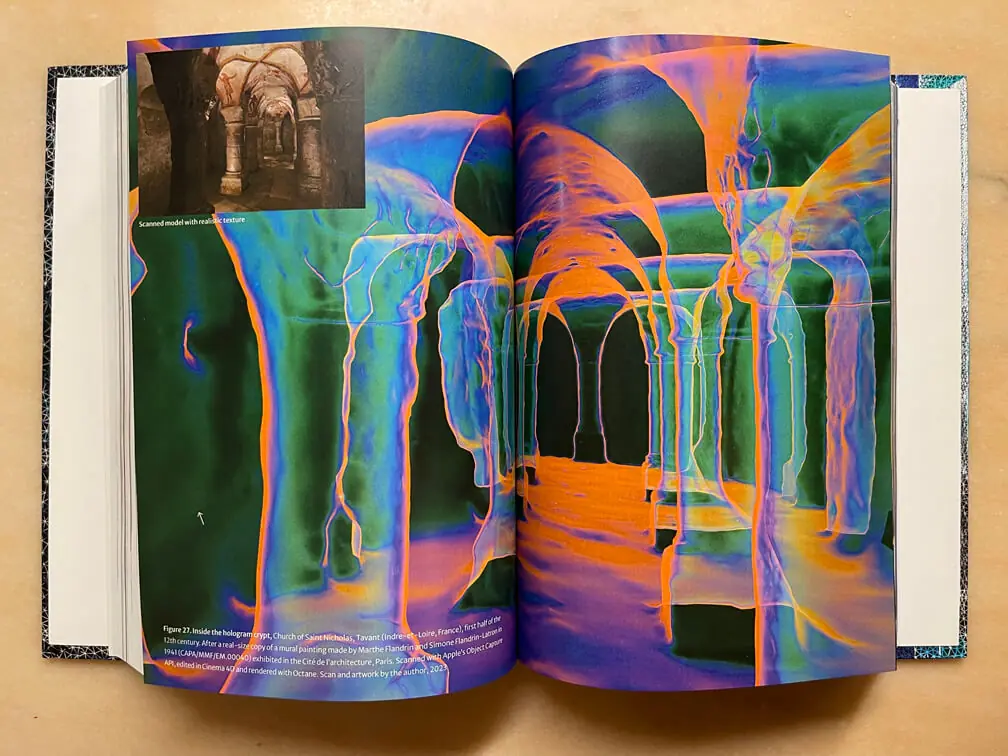
From Silk Road cosmology to machine vision. The "cloud collar" motif sculpted on a glazed
terracotta base from
the façade of the Mausoleum of Princess Shad-i Mülk Aqa at Shah-i Zinda, commissioned between 1371–1383 during
the Timurid period. The visualization juxtaposes the optimized geometric mesh of a photogrammetric scan and its
photorealistic rendering. The model was created from 33 photographs taken on 8 November 2021 with an iPhone 11
and processed using Apple's Object Capture API, Cinema 4D, Octane, and After Effects. Scan and visualization by
Mete Kutlu, 2023.
Contents
BOOK IV
The Crystal Matrix
From Glazed Codes to Digital Mosaics
Digital Media: Augmented Reality and 3D Scanning
Artisanal Media: From African Mosaics to Korean Temples
19
From Mosaics to Pixels
Walking within Simulated Gardens
20
Marbles as Crystallized Clouds
When Geology Becomes Cosmic Meteorology
21
The City as a Star Map
Matrakçi's Cosmographic Vision of Esztergom
22
The Augmented Flâneur
Walking through Layers of Myth and Code
23
Programming the City of Quartz
From Silica Tiles to Silicon Chips
French Institute of Central Asian Studies (IFEAC, Uzbekistan)