Scroll to open the book
Book I
Eastern Winds
Mythical Atmospheres
along the Medieval Silk Road
Empire of Clouds ·
Codes, Colors and Cosmos

Hypothesis

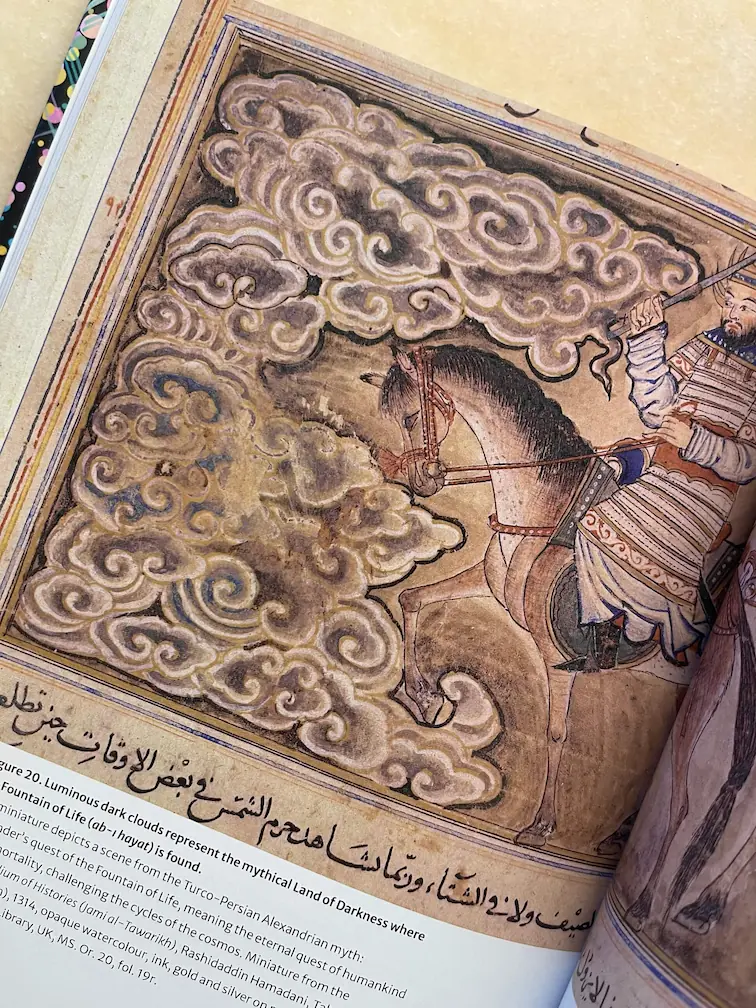
The cloud, once a central concept in premodern cosmology, has returned as the governing principle of our technological era. This research investigates the hypothesis that our cloud infrastructure is not a new invention, but the technological return of an ancient, encodable matrix of the world. By bridging the mythical forerunners of the Silk Road with contemporary AI, we uncover a genealogy where code, atmosphere, and cosmos are once again entangled.
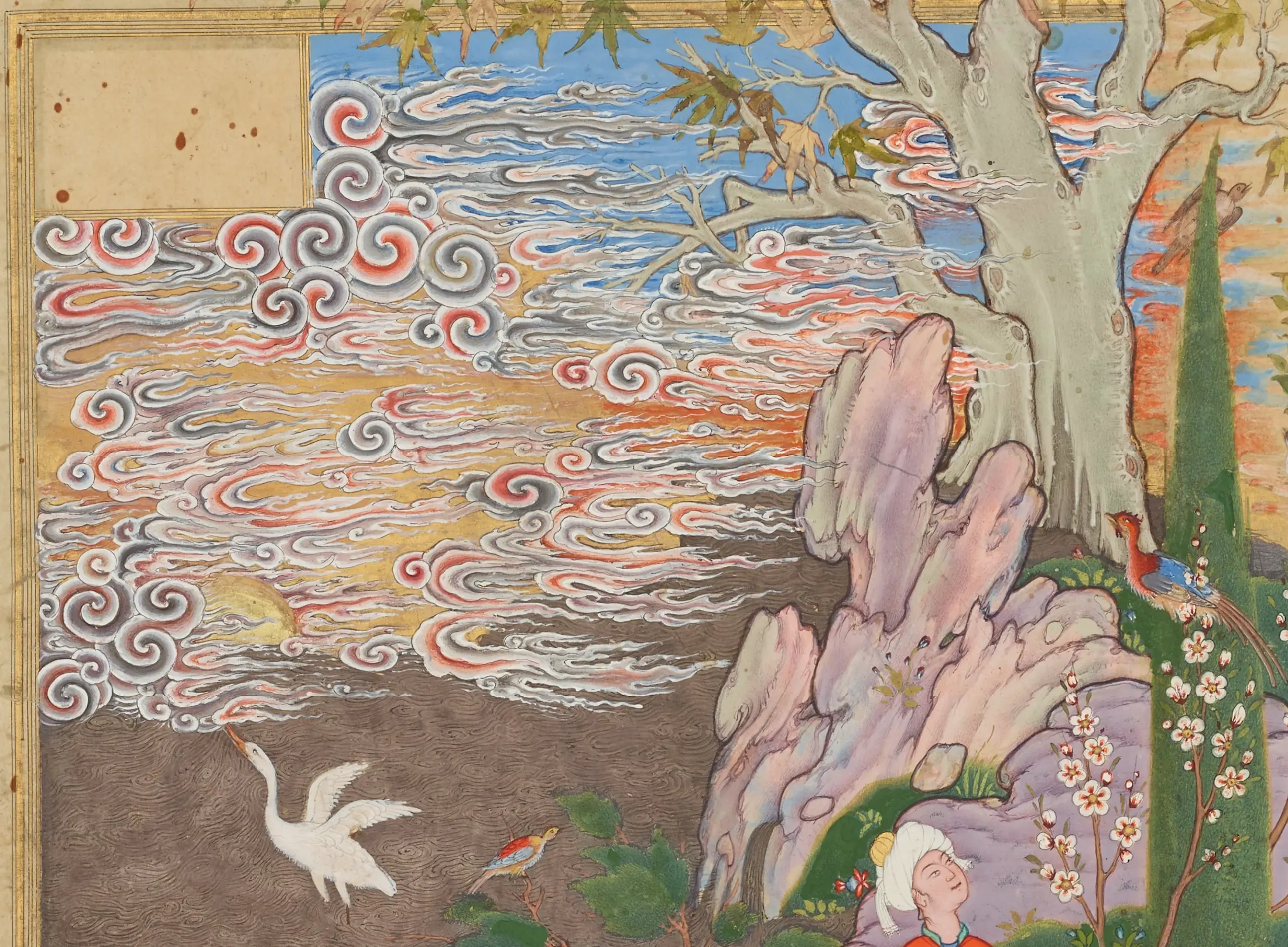
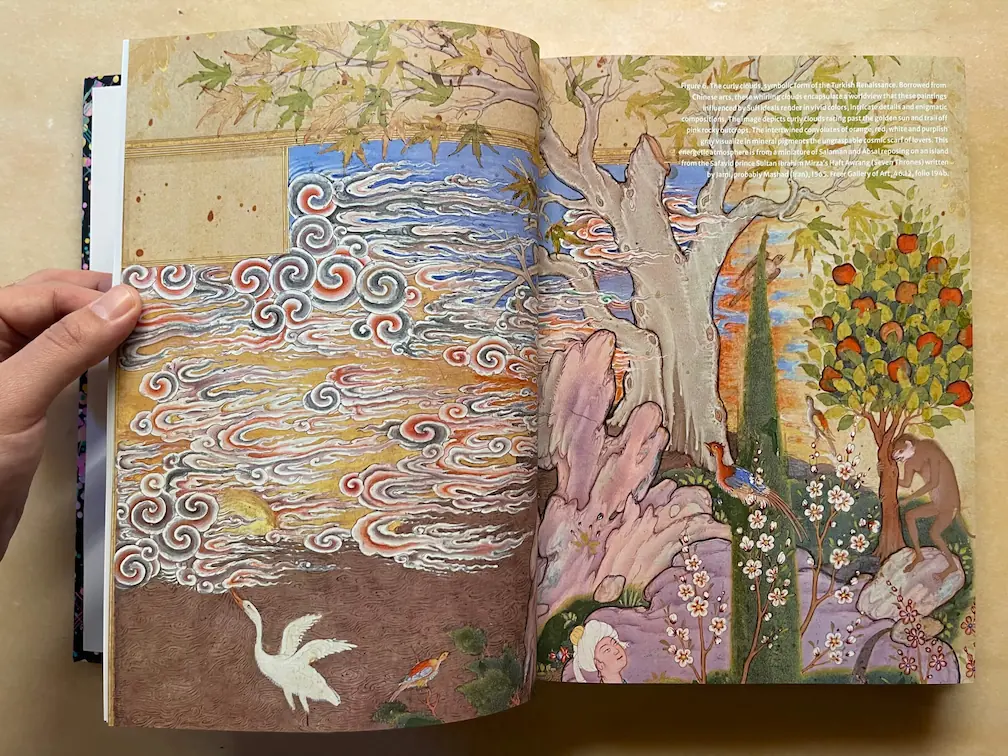
Curly clouds in orange, red and purple racing past a golden sun — Safavid miniature from Haft Awrang by Jami, Mashad, 1565
The curly clouds, symbolic form of the Turkish Renaissance. Borrowed from Chinese arts, these whirling clouds encapsulate a worldview that these paintings influenced by Sufi ideals render in vivid colors, intricate details and enigmatic compositions. The image depicts curly clouds racing past the golden sun and trail off pink rocky outcrops. The intertwined convolutes of orange, red, white and purplish gray visualize in mineral pigments the ungraspable cosmic scarf of lovers. This energetic atmosphere is from a miniature of Salaman and Absal reposing on an island from the Safavid prince Sultan Ibrahim Mirza’s Haft Awrang (Seven Thrones) written by Jami, probably Mashad (Iran), 1565. Freer Gallery of Art, 46.12, folio 194b.
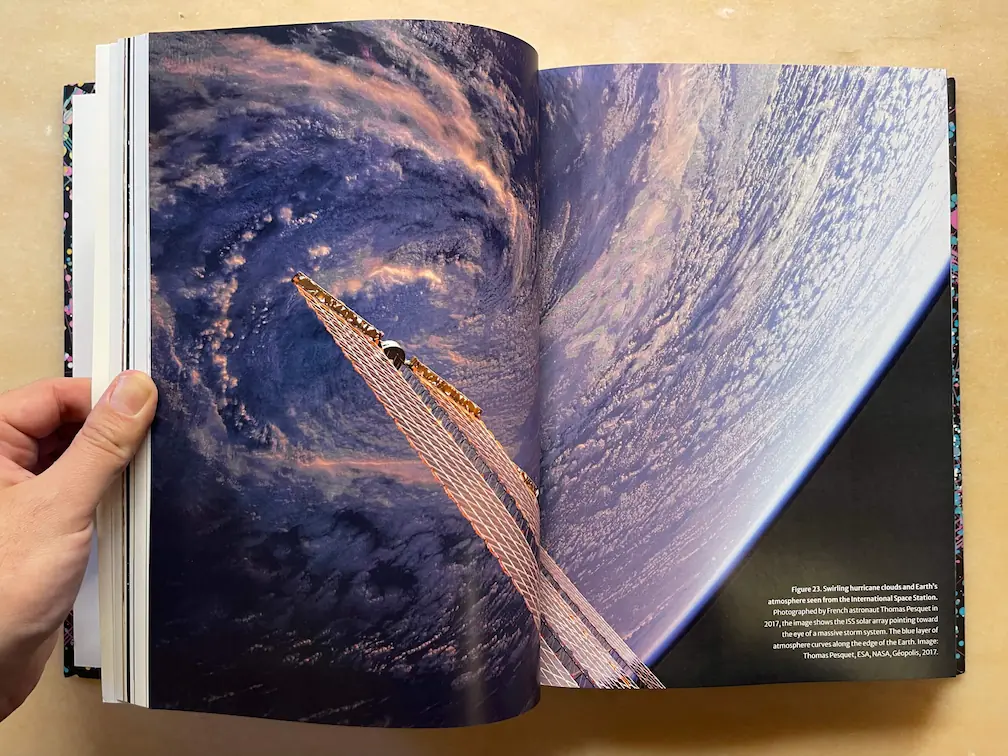
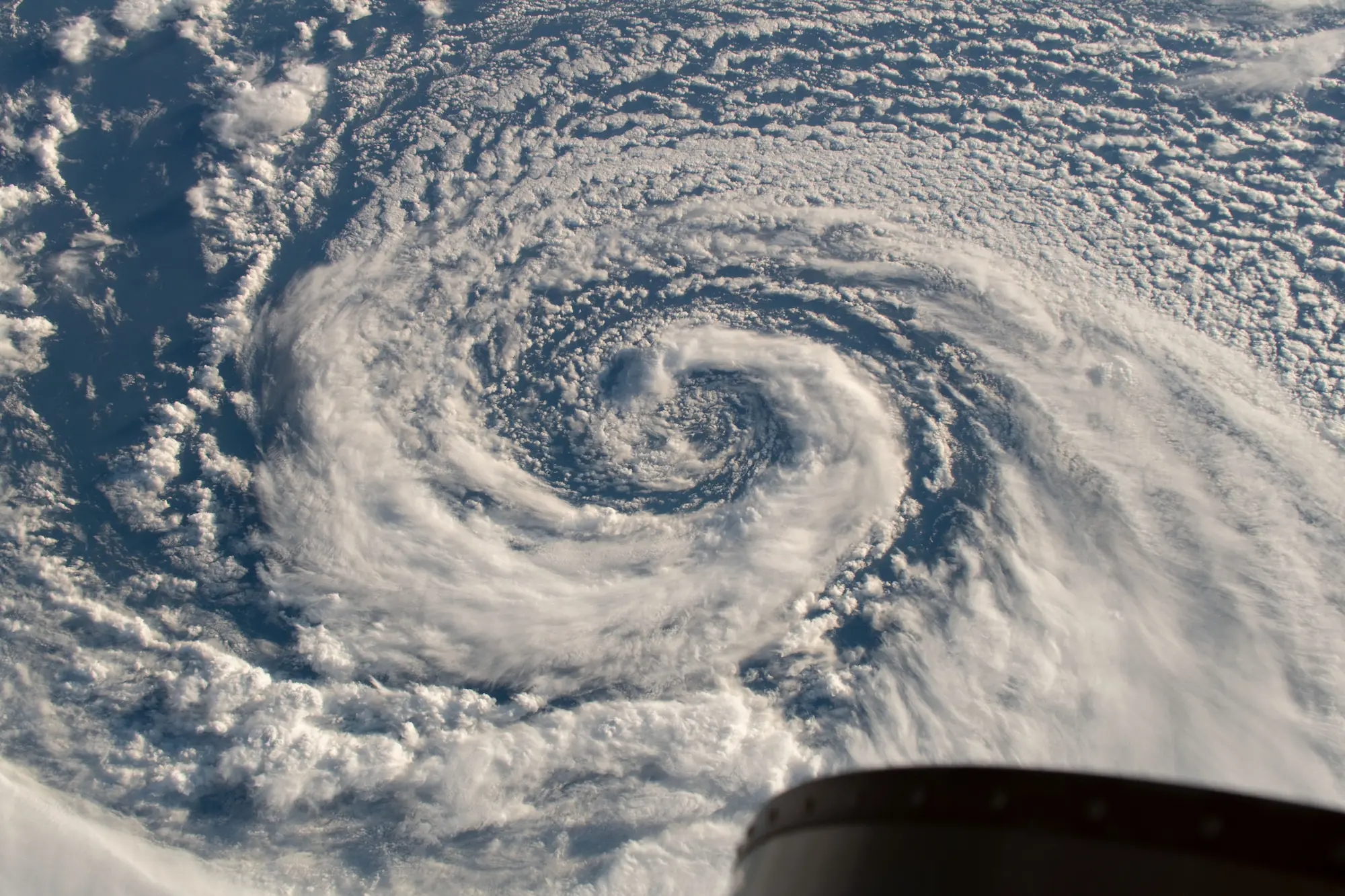
Spiraling cloud bands of a hurricane over the Pacific Ocean near Alaska — photograph from ISS Expedition 57, 17 December 2018, NASA Johnson Space Center
Spiraling cloud bands of a hurricane over the Pacific Ocean, near Alaska. Photograph captured during ISS Expedition 57, 17 December 2018. In Turkish and Persian miniature painting, clouds are not depicted as they appear from the ground but as symbols of their fundamental principle, turbulence. Image: NASA Johnson Space Center, Earth Science and Remote Sensing Unit, JSC Gateway to Astronaut Photography of Earth.
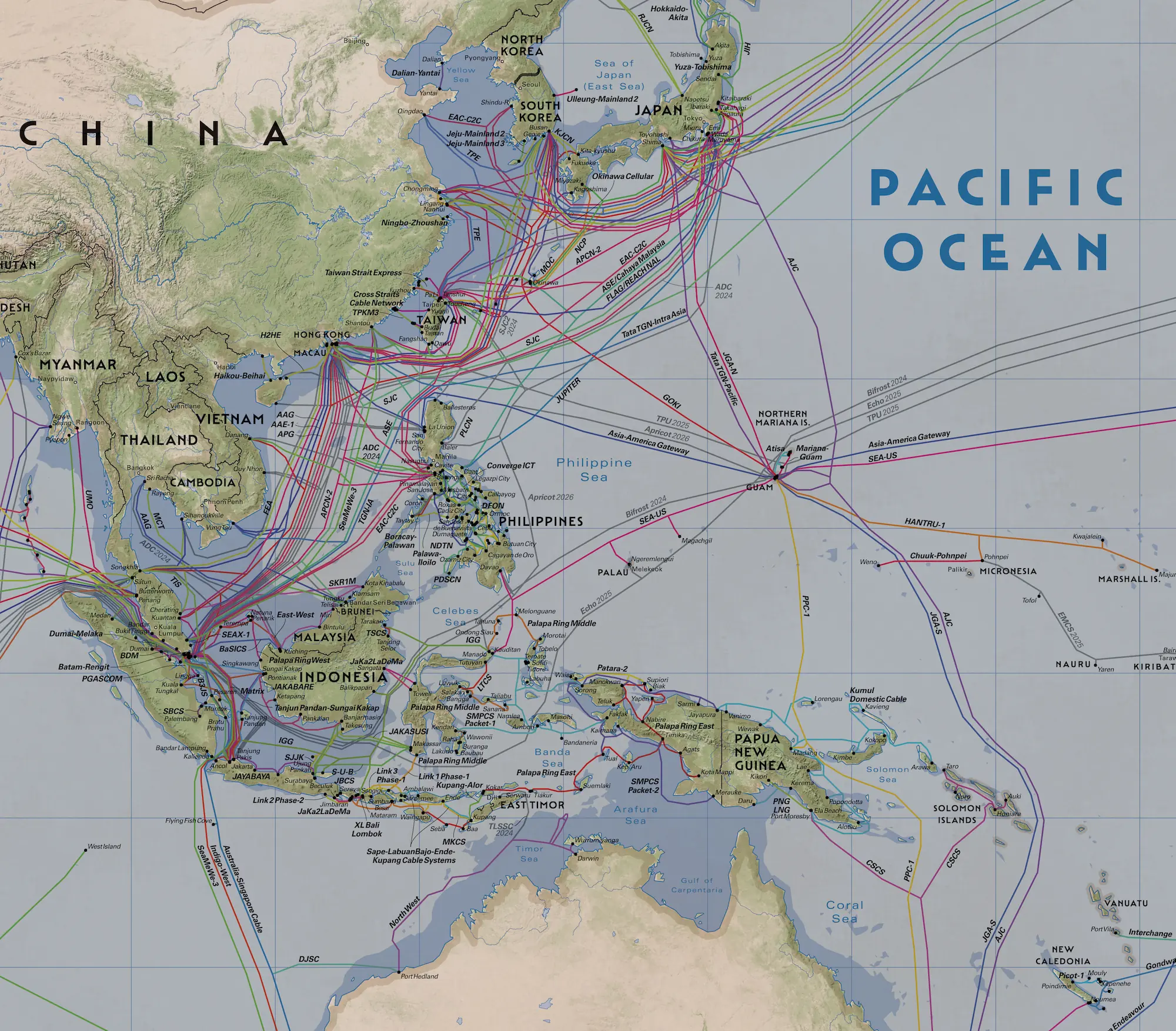
Indo-Pacific submarine cable network map — the physical nervous system of global cloud computation spanning the ocean floor, TeleGeography Submarine Cable Map 2024
A fragment of the vast planetary infrastructure of the cloud in the Indo-Pacific region. Beneath the oceans runs the physical nervous system of global computation, extending the ancient metaphor of the cloud into a material network spanning the Earth. Image: Center for Strategic & International Studies, TeleGeography, Submarine Cable Map 2024.

The Spiral of History

History is not a linear sequence but a turbulent spiral where past and future fold into one another. As the rigid maps of the Renaissance fail to orient us in the digital age, we search for alternative reference points such as postmodern archaism, electronomadism, digital handicrafts, neomedievalism, and the digital baroque. This inquiry is rooted in my time at the offices of Kengo Kuma and SANAA, where I encountered the notion of a “primitive future” expressed through blurred and ambiguous spaces. At the heart of this movement lies the cloud, functioning simultaneously as a global infrastructure and a sacred symbol.
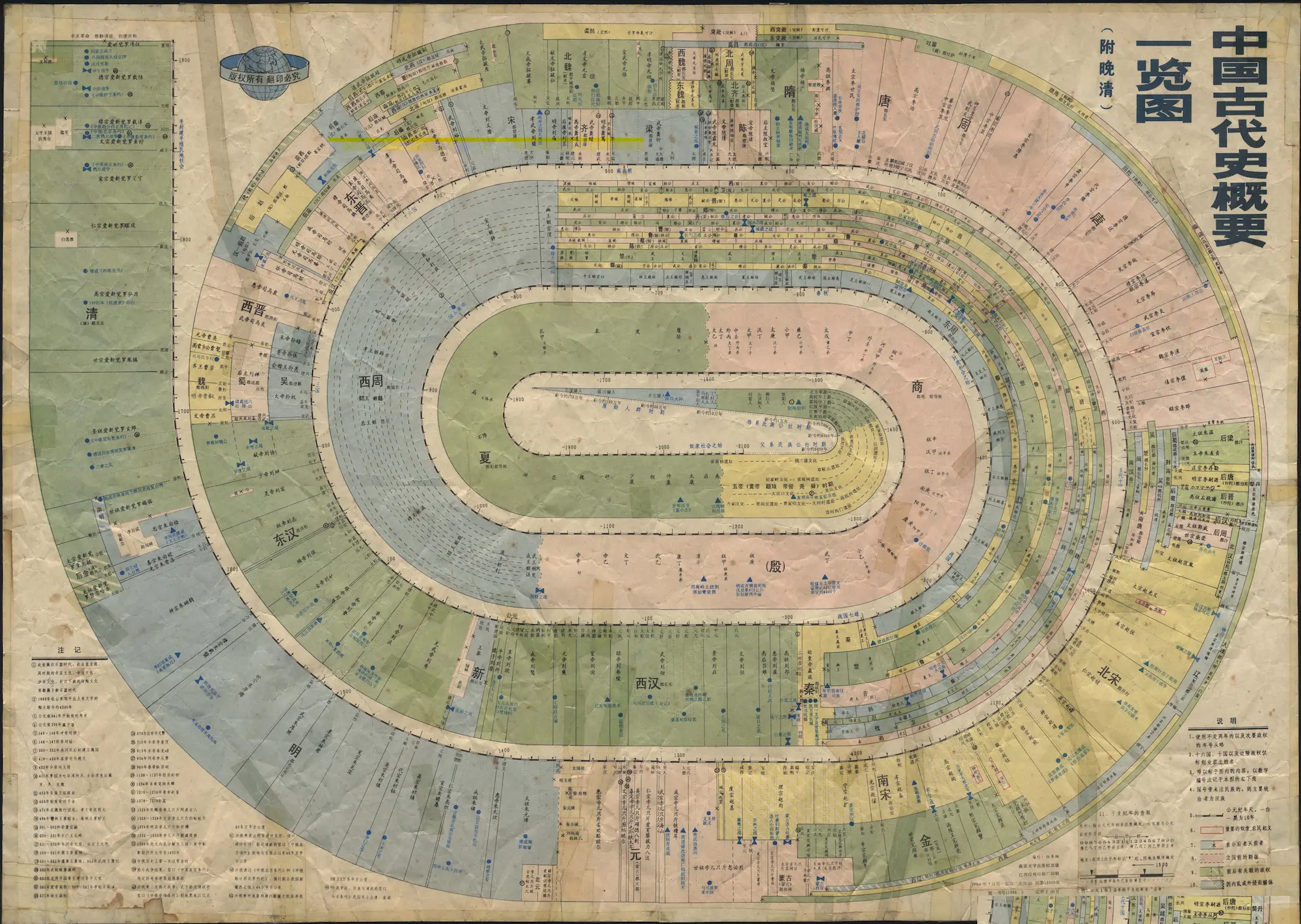
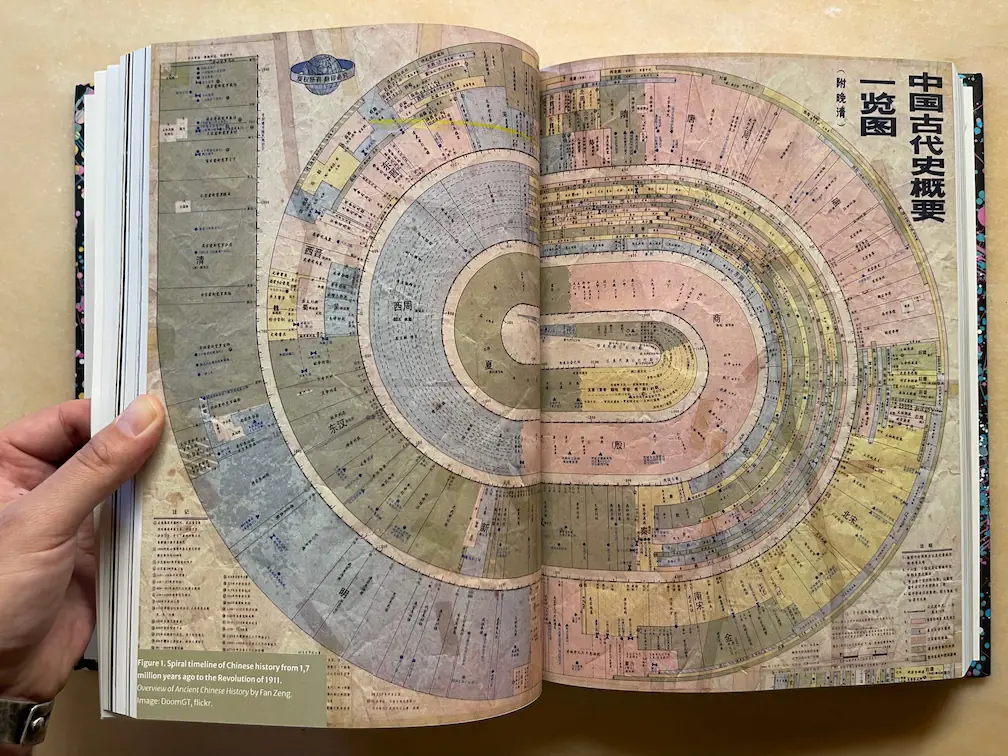
Spiral timeline of Chinese history from 1.7 million years ago to the Revolution of 1911 — diagram by Fan Zeng showing dynasties as concentric spiral arms. Image: DoomGT, Flickr
Spiral timeline of Chinese history. Overview of Ancient Chinese History from 1.7 million years ago to the Revolution of 1911, by Fan Zeng. Image: DoomGT, Flickr.
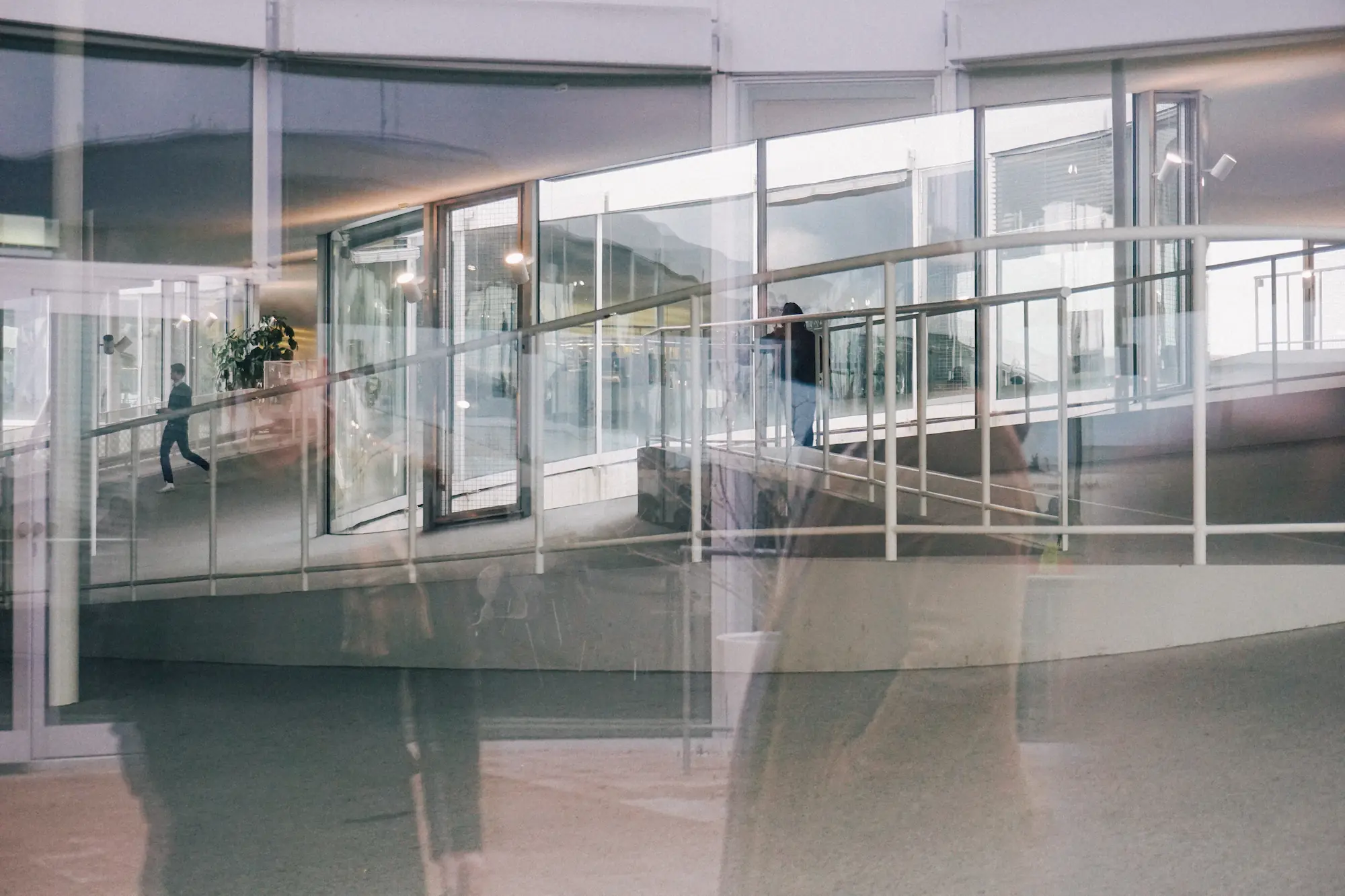
Interior of the Rolex Learning Center by SANAA, Lausanne, Switzerland, 2010 — continuous curved surfaces and glass facades dissolving spatial boundaries. Photograph by Mete Kutlu, 2015
A clouded vision: being everywhere and nowhere. Spatial ambiguity and space as threshold. Metal panels, glass façades, white walls, and continuous curved surfaces multiply reflections and dissolve spatial boundaries, confusing the perception of place and presence. Rolex Learning Center designed by SANAA, Lausanne, Switzerland, 2010. Photograph by Mete Kutlu, 2015.

Thought Beyond Intelligence

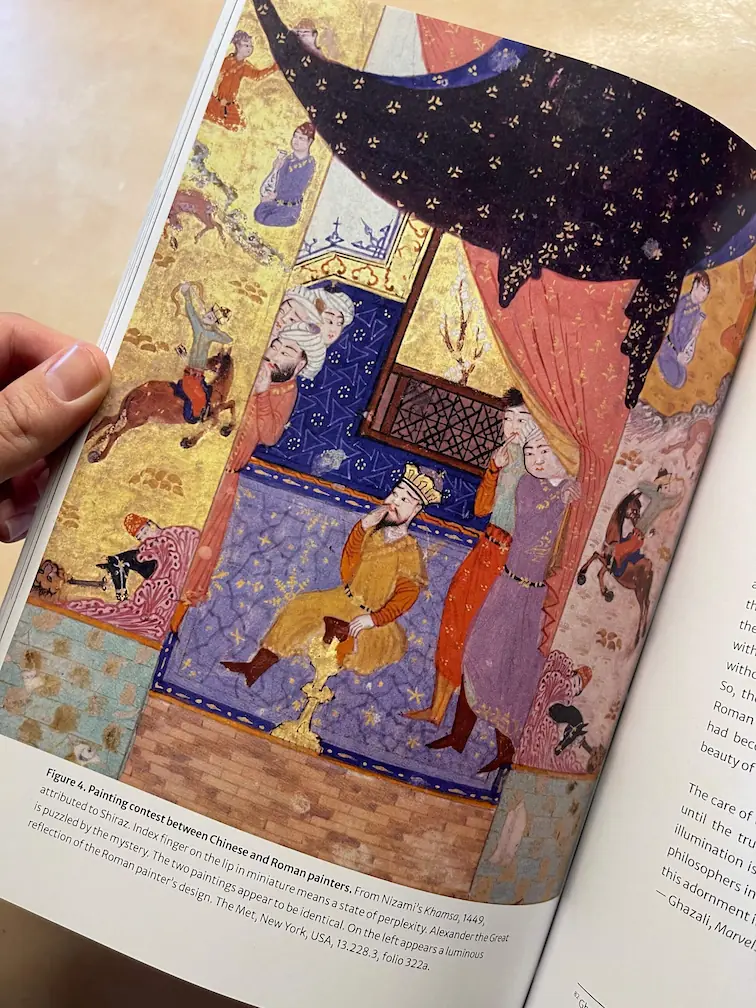
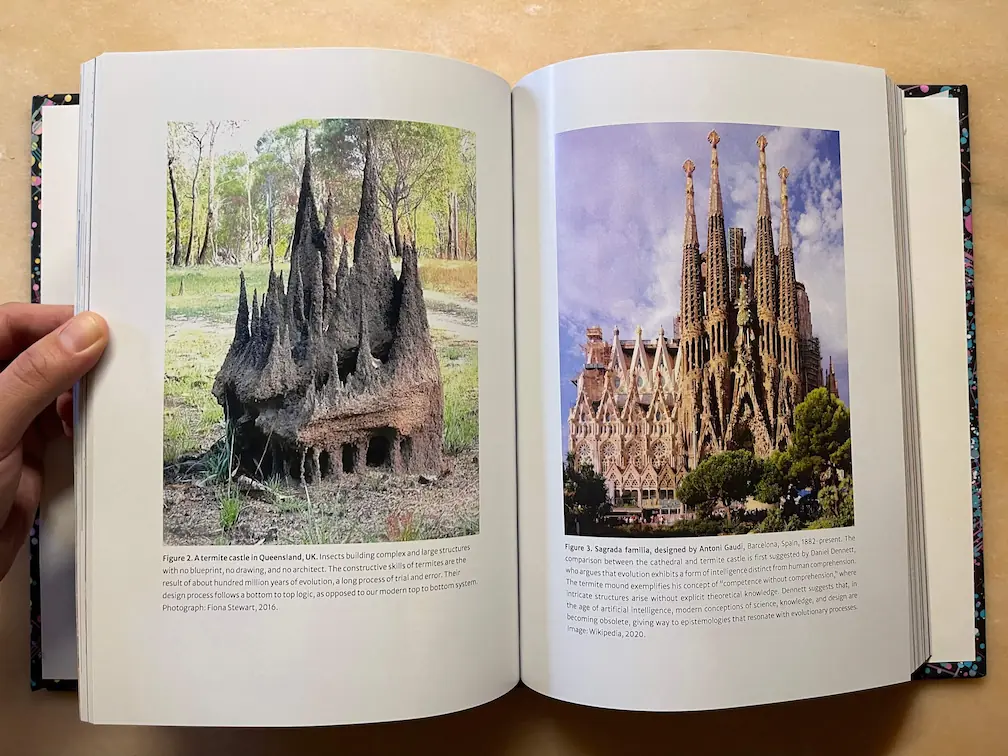
As we delegate our cognitive functions to machines, we risk losing the very trait with which we have identified ourselves as Homo sapiens, the human who knows. In response, we must reclaim uniquely human modes of thought to survive the age of AI. Confronted by the speed and opacity of neural networks, we turn back to myths as flexible tools for navigating complexity. We explore concepts such as competence without comprehension, nonconscious cognition, and the art of thinking the unthinkable. Yet these questions are not entirely new. Along the Silk Road, a striking myth invites us to ponder the nature of thought and creativity: the famous contest between the Chinese and Roman painters at the court of Alexander the Great.

Dragon’s Breath

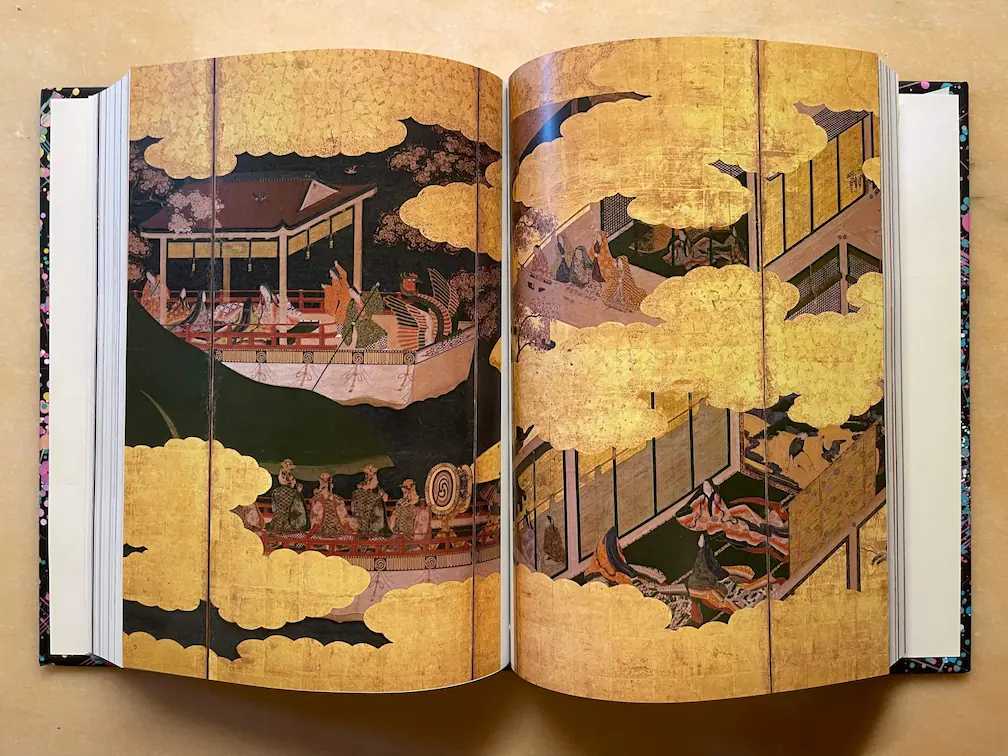
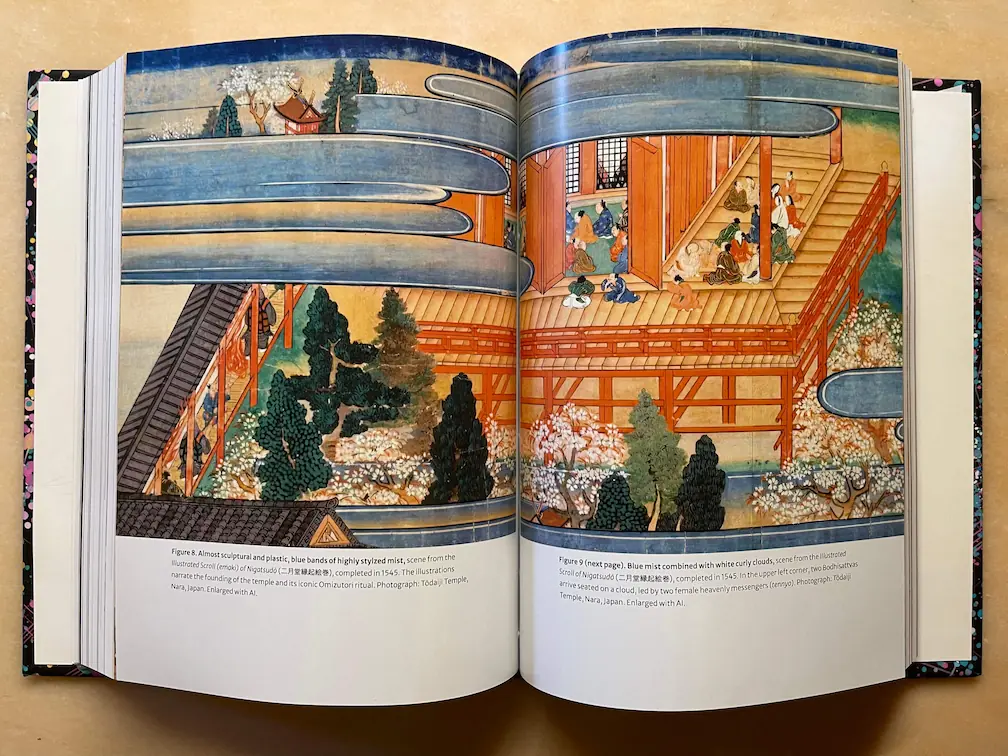
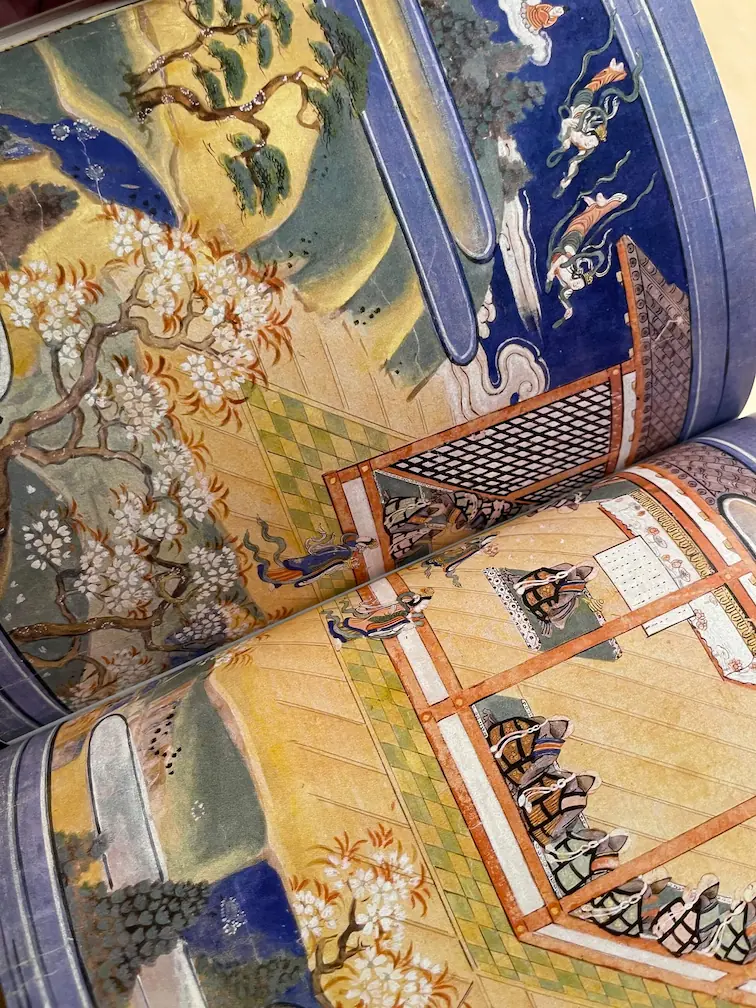
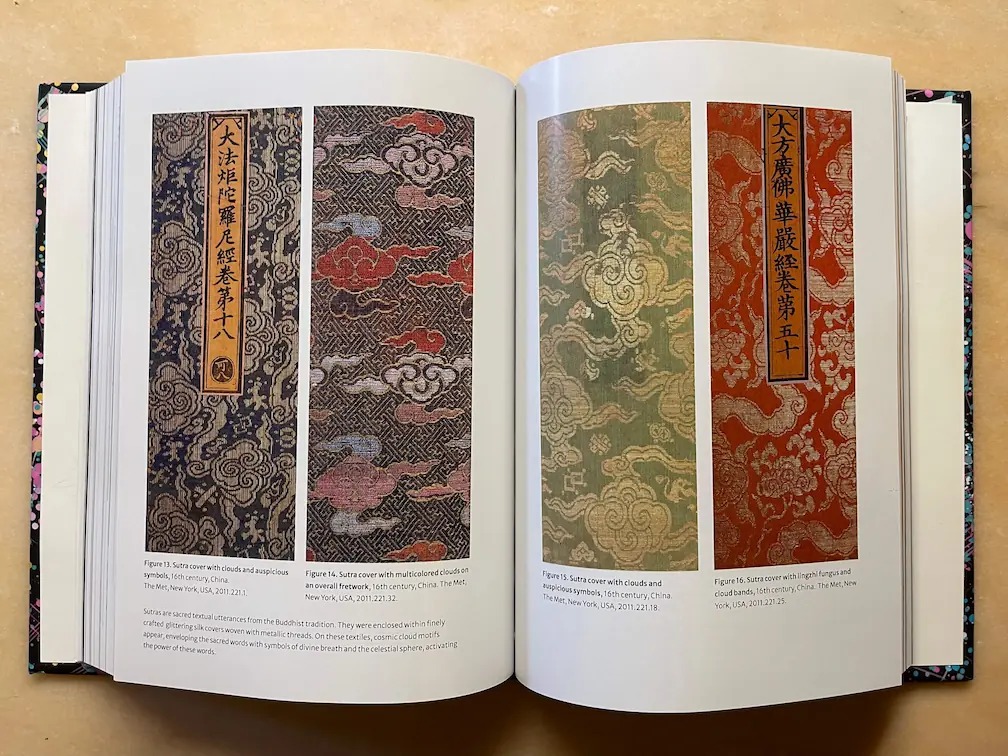
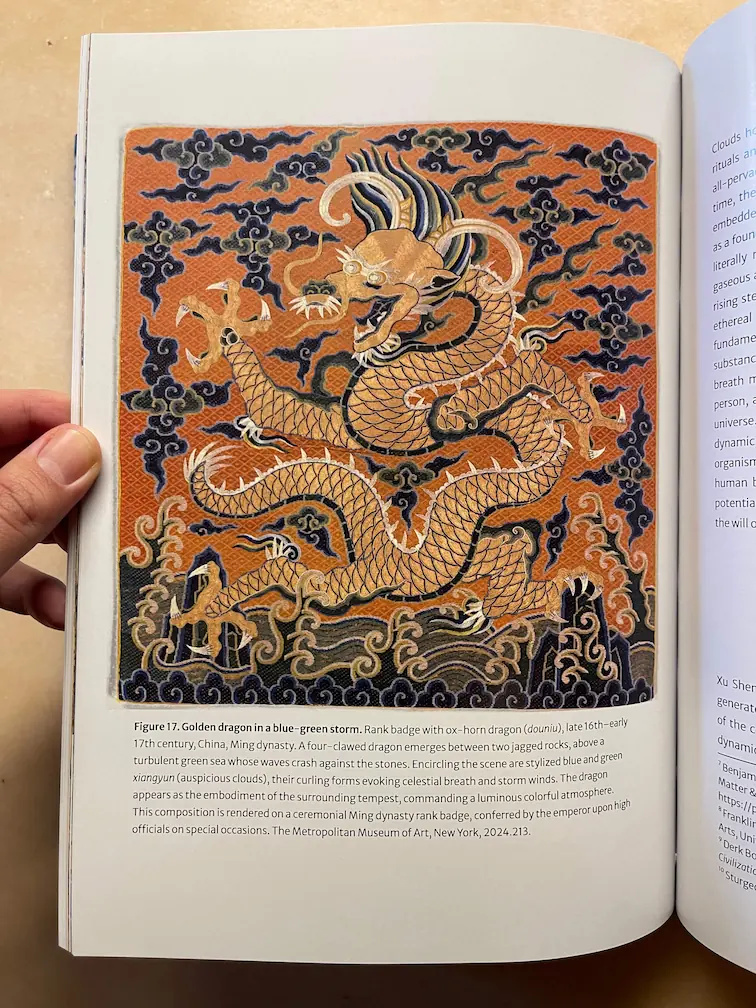
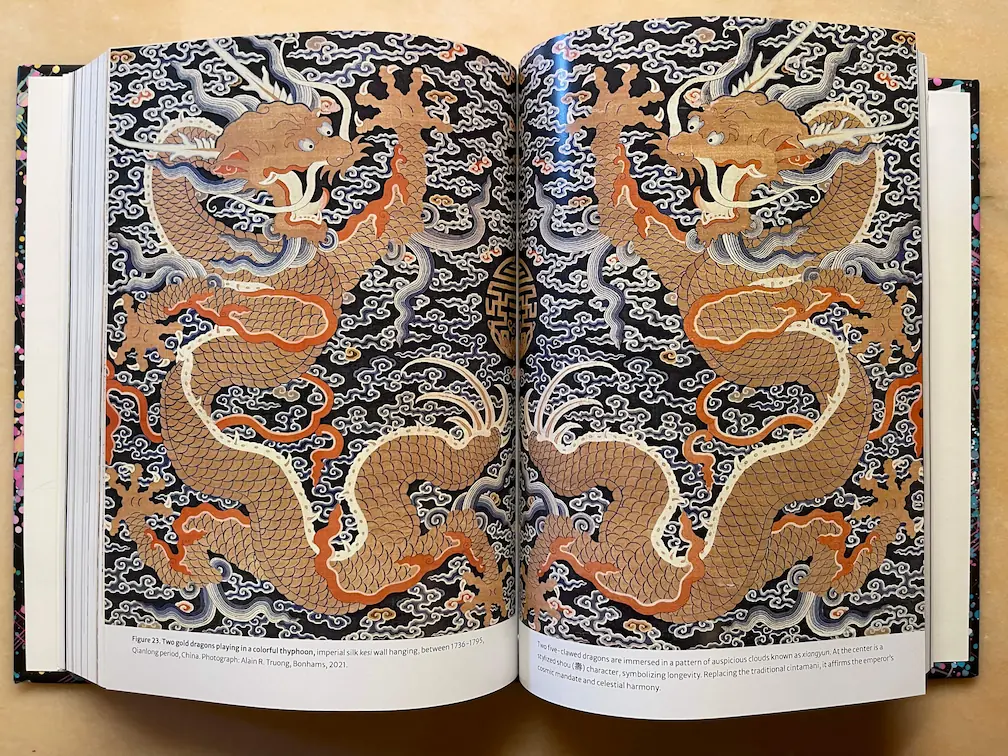
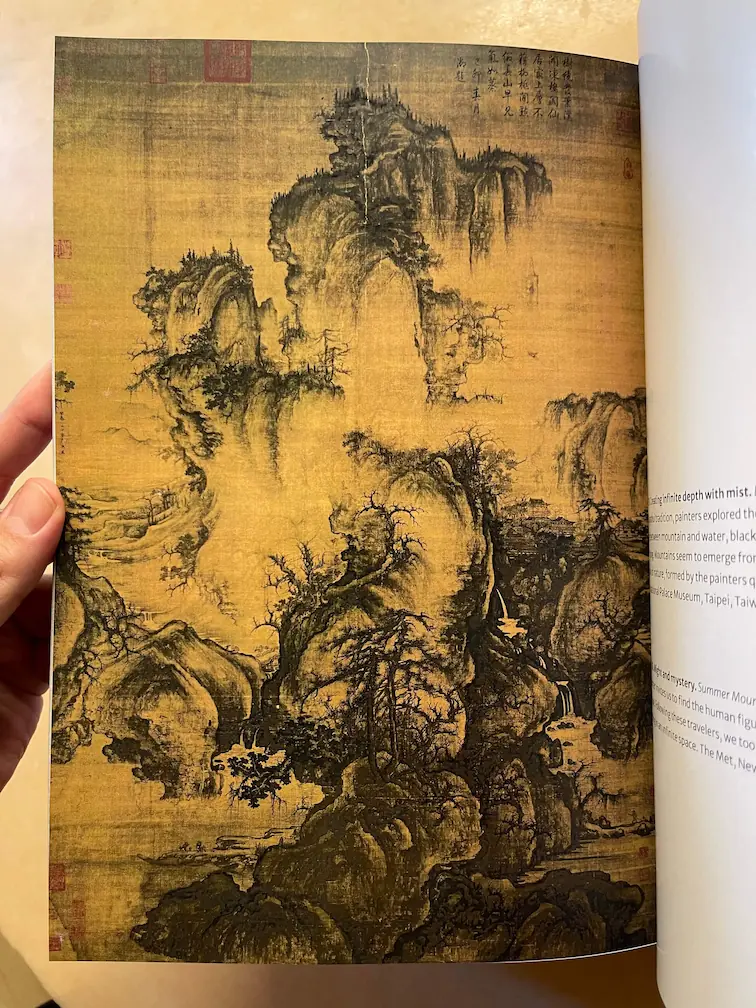
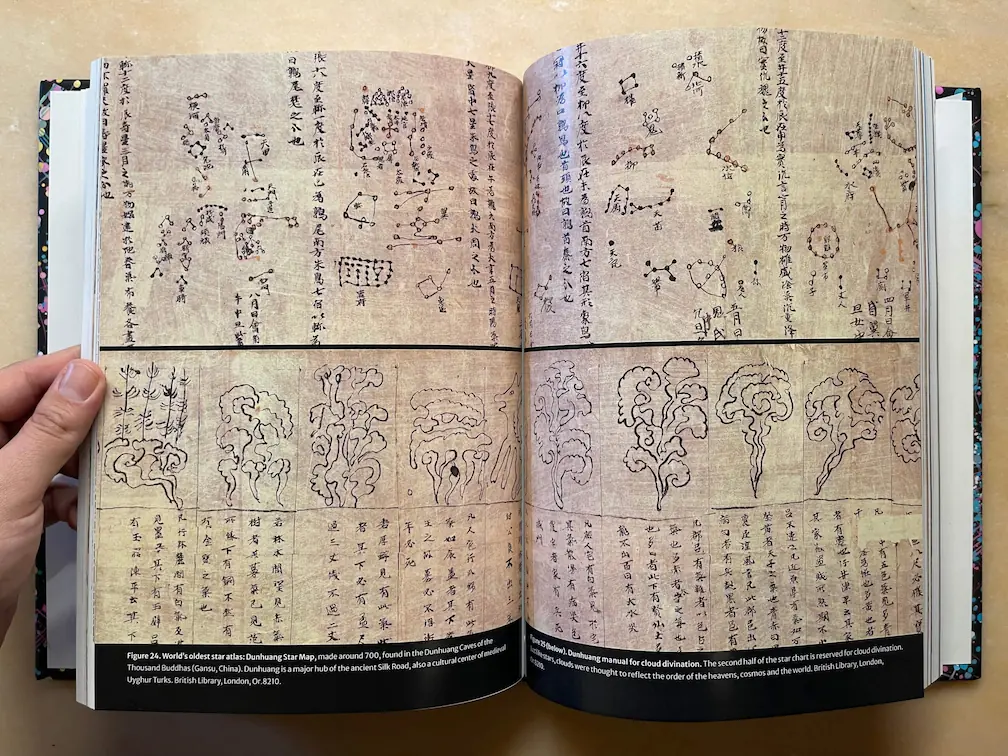
This chapter traces the cloud’s emergence as a cosmological symbol in East Asia. Originating in the dynamic monsoon climate of Neolithic China, the cloud was seen as an auspicious harbinger of abundance, standing in contrast to the obscuring clouds of Western thought. Clouds embodied qi, the vital energy of the cosmos. They are the exhalations of dragons and the vehicles of gods. Watched as celestial prophecies alongside stars, they revealed the hidden rhythms of the universe. Chinese and Japanese painters used these clouds and mist to evoke this invisible yet omnipresent energy, creating open-ended and networked immersive visions.
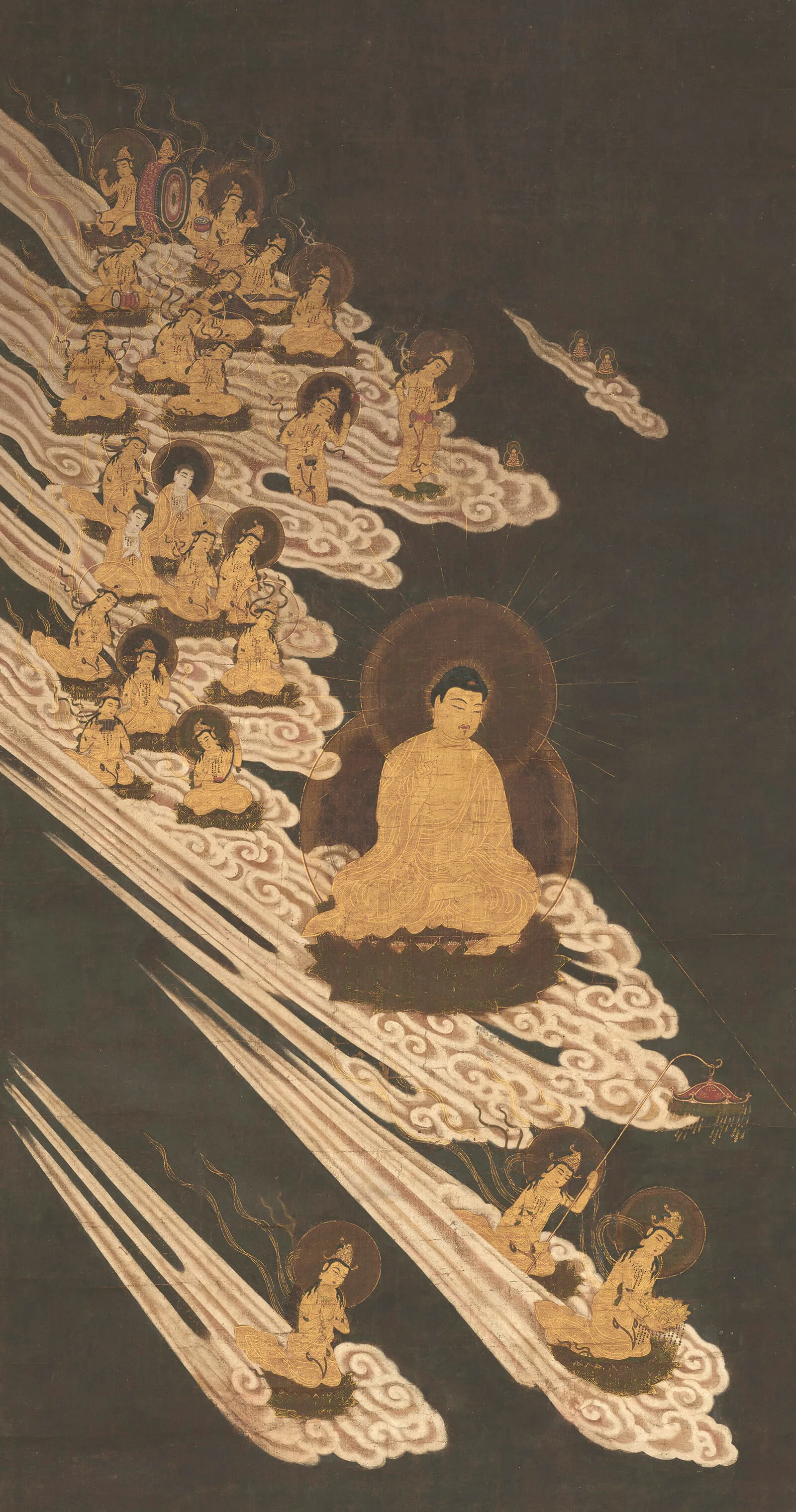
Amida and the Twenty-Five Bodhisattvas descending on luminous golden clouds — Muromachi period silk hanging scroll, 16th century, Nara National Museum
Clouds as vehicles moving between Earth and Heaven. They serve as interdimensional transportation means for gods, immortals, and enlightened beings known as bodhisattvas. The clouds bring luminous beings depicted entirely in gold. They connect the realm of light to the realm of matter. The painting depicts Amida and the Twenty-Five Bodhisattvas Coming to Welcome the Deceased. Muromachi period, 16th century, color on silk hanging scroll. Paper size: 107.9 x 57 cm. Nara National Museum, Nara, Japan, 1524-0, H055564.

The Turkish Storm

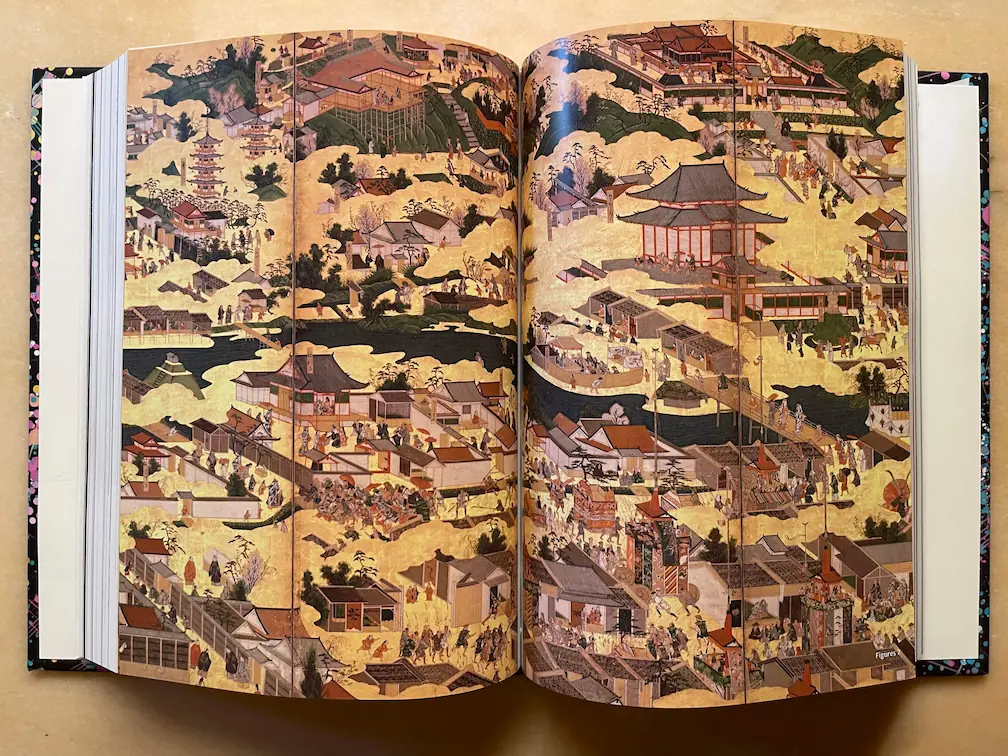
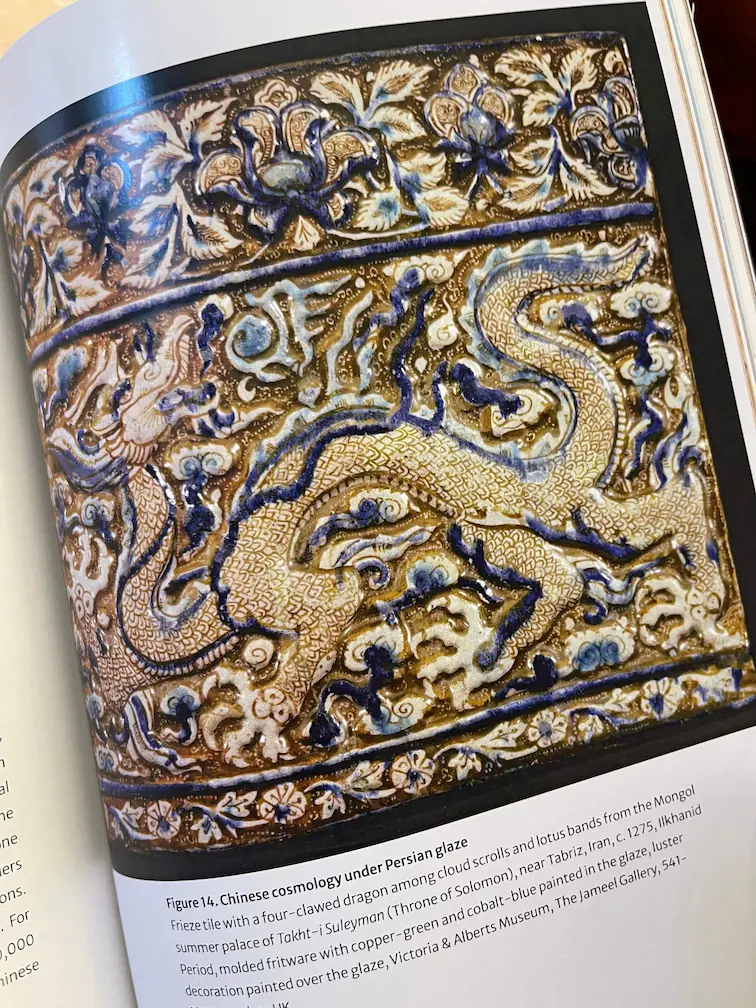
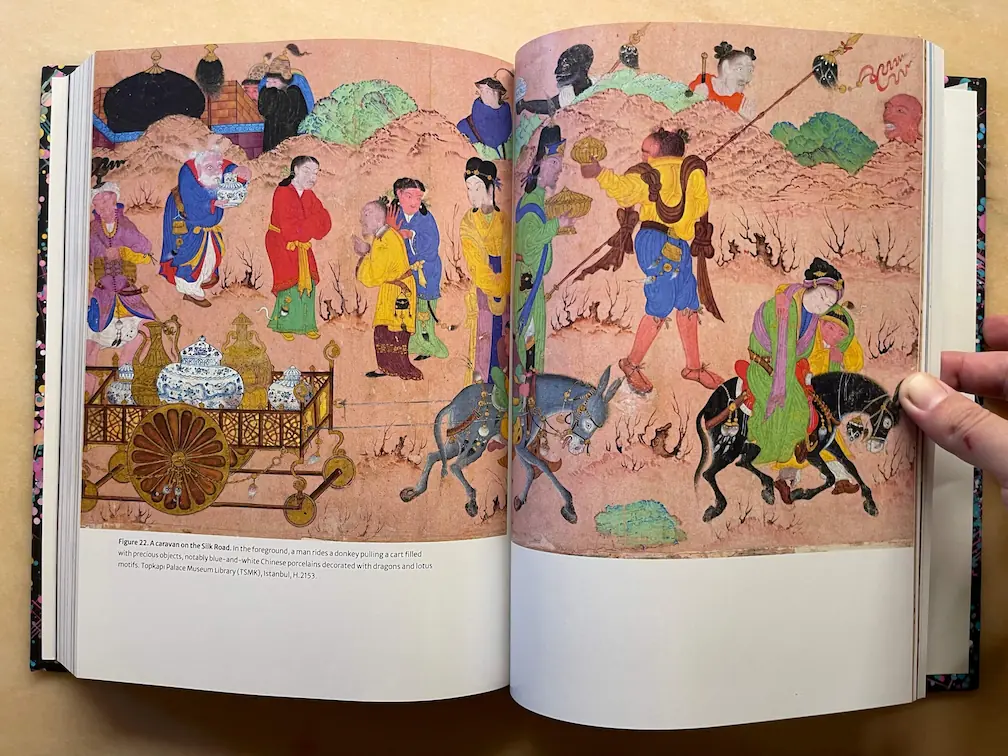
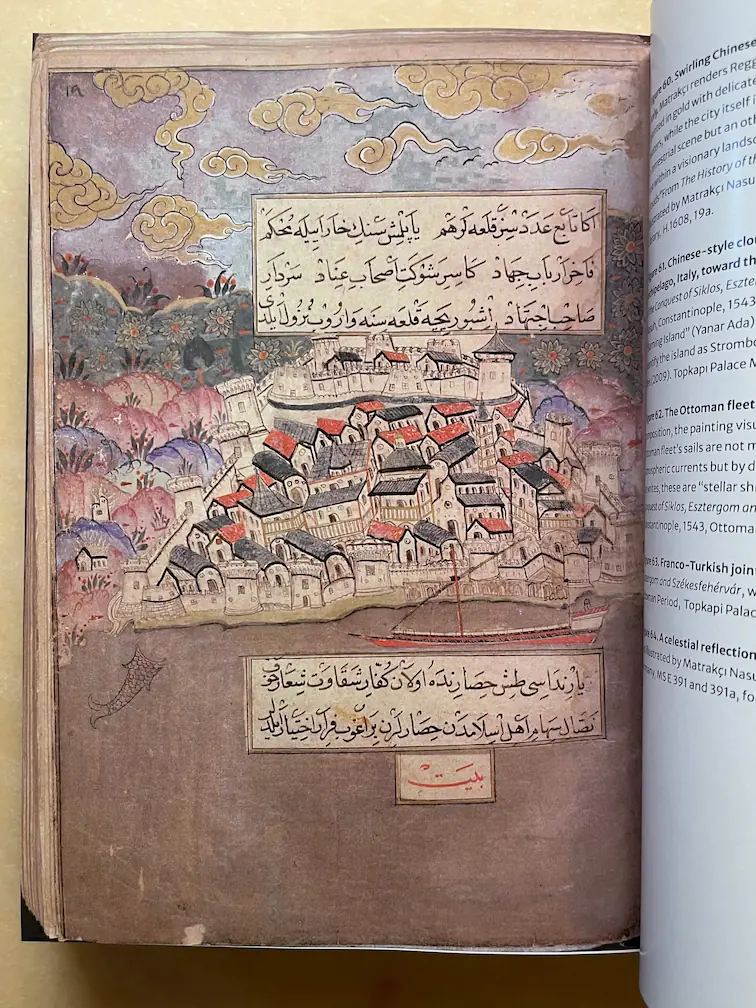
Asian dragons and clouds traveled on the banners of Turkish and Mongol empires, from the Pacific to the Mediterranean, from Khanbaliq (Beijing) to Constantinople. These Chinese clouds would even drift over the French and Italian rivieras when Matrakçı Nasuh, the da Vinci of the Ottomans, depicted the cities he saw from a ship during joint Franco-Turkish military campaigns. We explore the inclusive and cosmopolitan culture of the nomads, not as barbarians but as builders of civilization. Along the Silk Road, a myth arose of Turkish princes as curious patrons of art, collecting the “eyes of the world.” We trace the flowering of this vision in the Turkish Renaissance of Samarkand (Uzbekistan) and Herat (Afghanistan). We compare the spatial compositions of two miniatures with two examples of contemporary architecture, revealing a shared skepticism of rationalist expression and of rigid linear hierarchies.
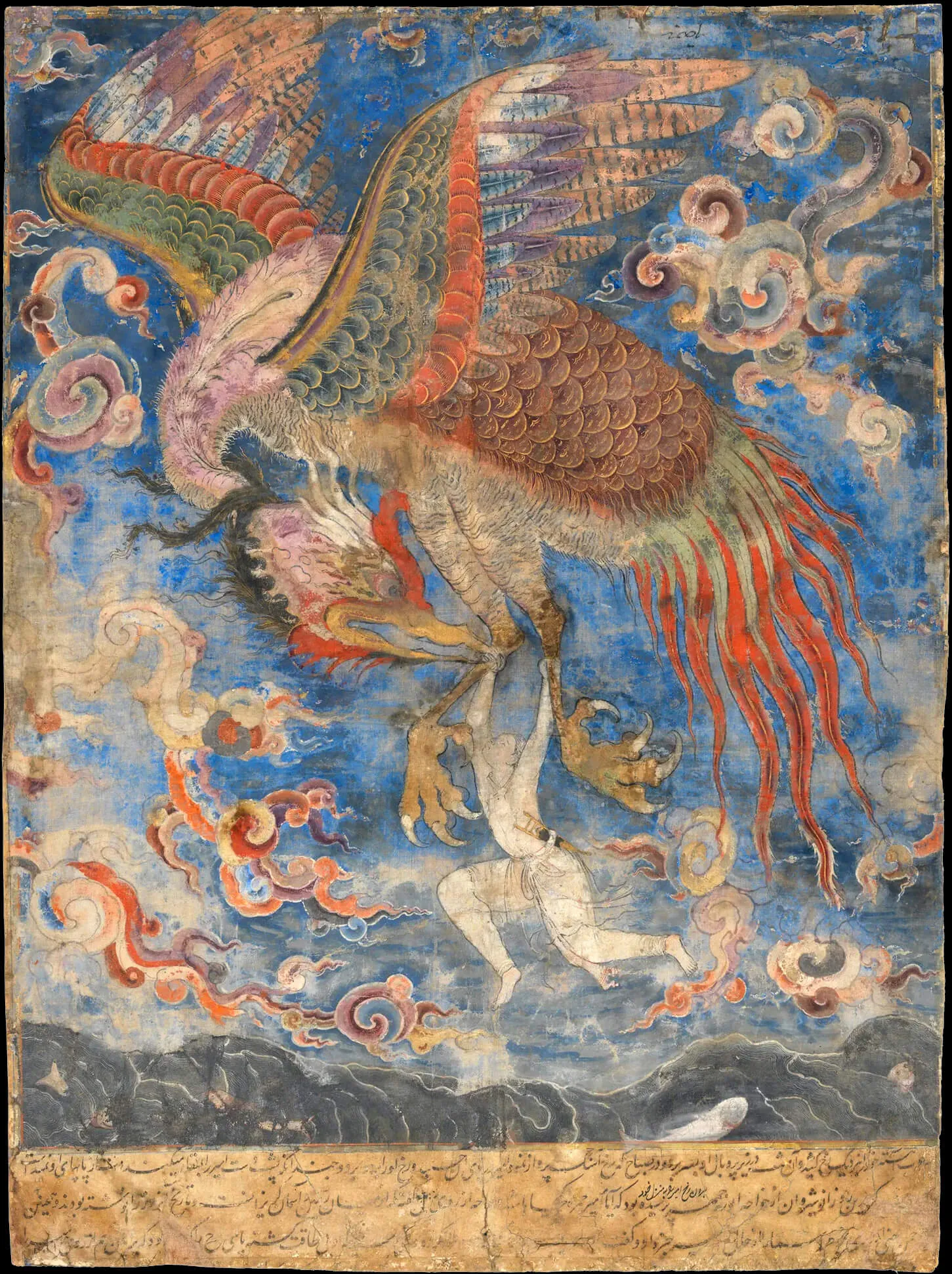
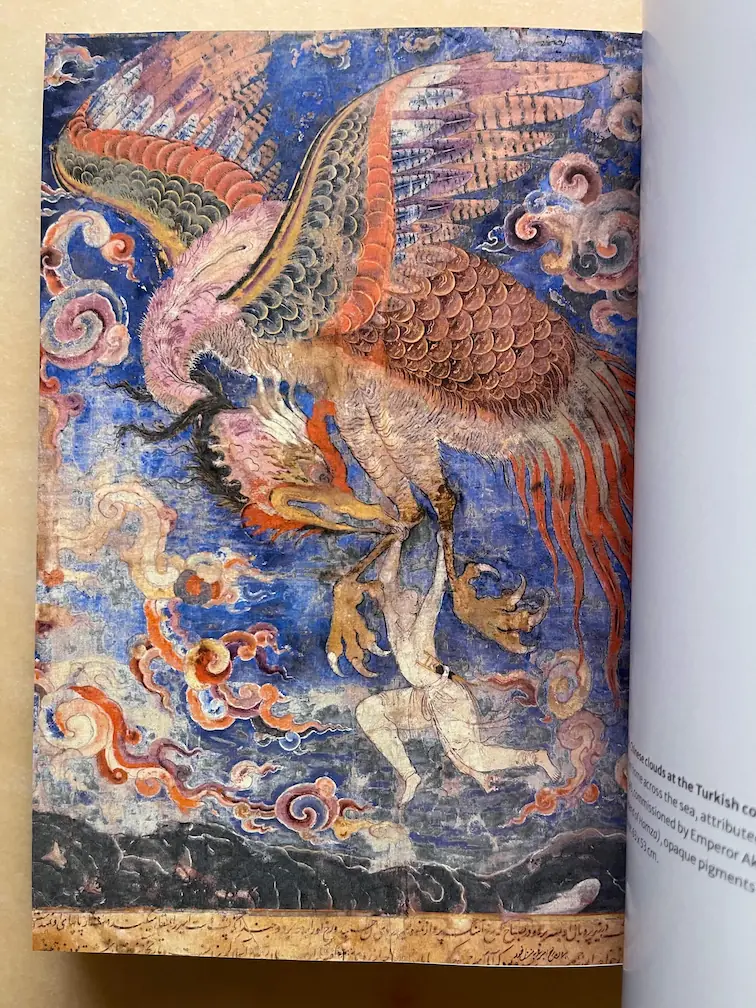
Chinese clouds at the Turkish court of India — Amir Hamza carried by the Rukh across the sea, Legend of Hamza (Dastan-i Hamza), Fatehpur Sikri, c. 1565
Chinese clouds at the Turkish court of India. Amir Hamza clings to the Rukh's legs to carry him home across the sea, Legend of Hamza (Dastan-i Hamza), Fatehpur Sikri, India, Mughal period (Baburid), c. 1565.
Listen to an excerpt
A short reading from Chapter 1 Spiral of Knowledge
0:00 / 0:00
This is a vision of civilization
that does not begin in Florence
but in Herat,
not with Leonardo but with Behzad.
Not with the fixed point,
but with the drifting cloud.
We are not in Italy, but in Turkistan.

I propose
an alternative vision of civilization,
one that is not sedentary but nomadic,
not European but Asian,
not standardized but cosmopolitan,
not exoteric but esoteric,
not rational but inspirational.

This is a story
not written as prose but as poem,
not of order but of turbulence,
not of solids but of fluids,
not of grids but of spirals.

Mete Kutlu, Empire of Clouds, Book I, page 33, Paris, 2025.
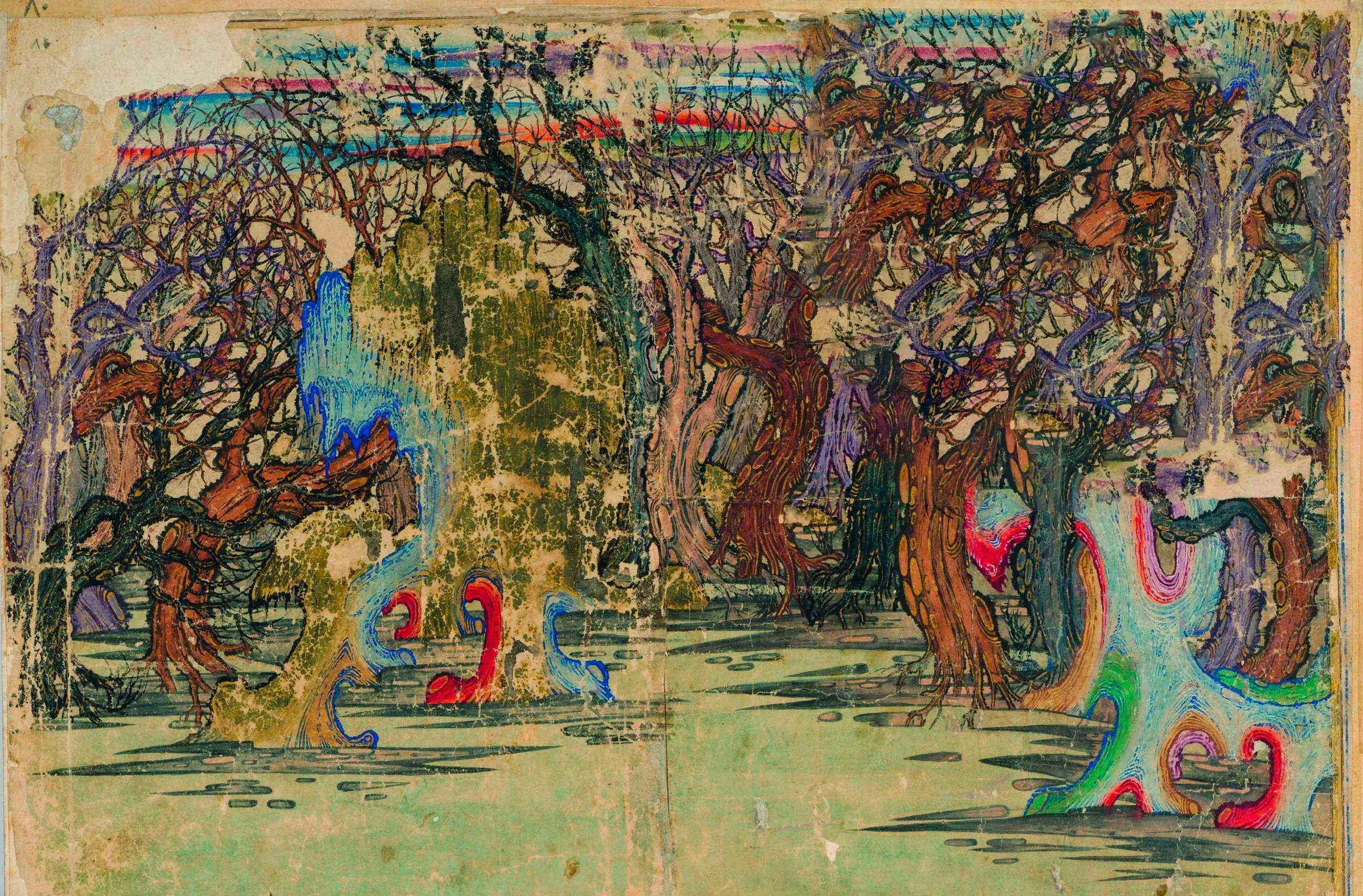
Winter scene — dried twisted trees and Chinese-inspired scholar's rocks reimagined as an iridescent dreamscape in an Ottoman miniature, 15th century, Topkapı Palace Museum Library
Winter Scene. Turkish imagination transforms a dense winter grove of dried, twisted trees into a variegated dreamscape. Crooked, perforated trunks and fantastical scholar’s rocks (gongshi), inspired by Chinese models, are reinterpreted as an iridescent, otherworldly terrain. The sky mirrors the same colors as the rocks. Atmosphere and geology are entangled through mystical vision and love. The upper right corner has been reconstructed with AI. Turcoman period, 15th century, Baghdad or Tabriz?, Topkapı Palace Museum Library (TSMK), H.2153.

Contents

General Introduction
1
Methodological Statement
Context, Hypothesis & State of the Art
2
Spiral of History
When the Past Becomes a Future Again
3
Thought Beyond Intelligence
The Human Mind in the Age of AI
Eastern Winds
4
Dragon's Breath
Clouds as Cosmic Energy in East Asian Culture
5
Turkish Storm
Carrying the Chinese Cloud to Roman Lands

A Look inside the Book

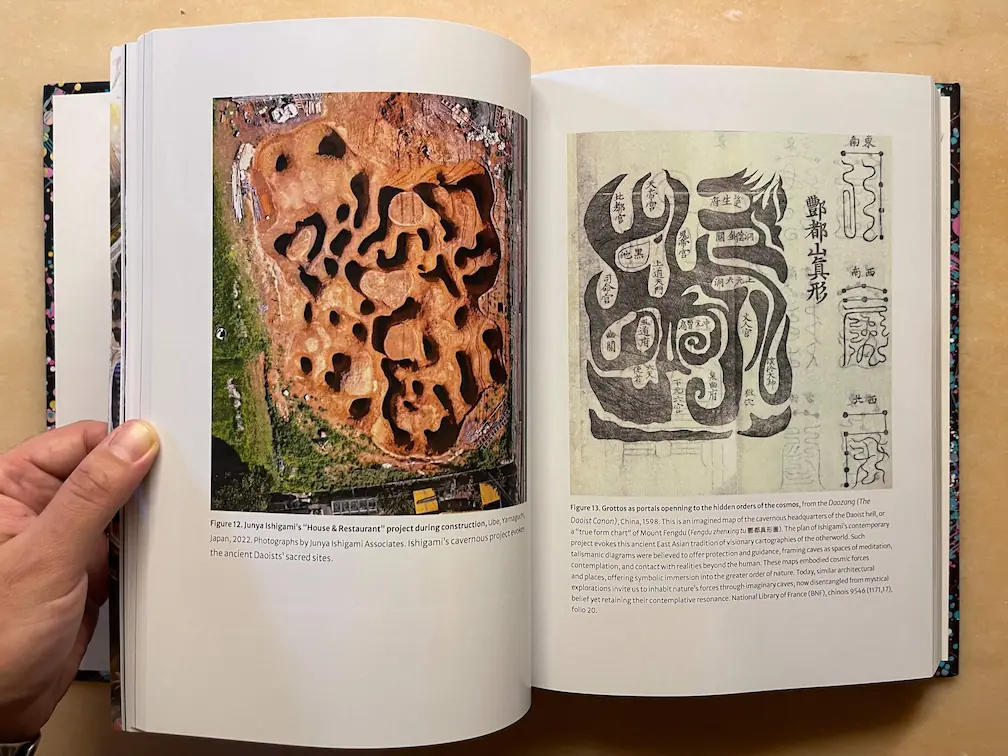
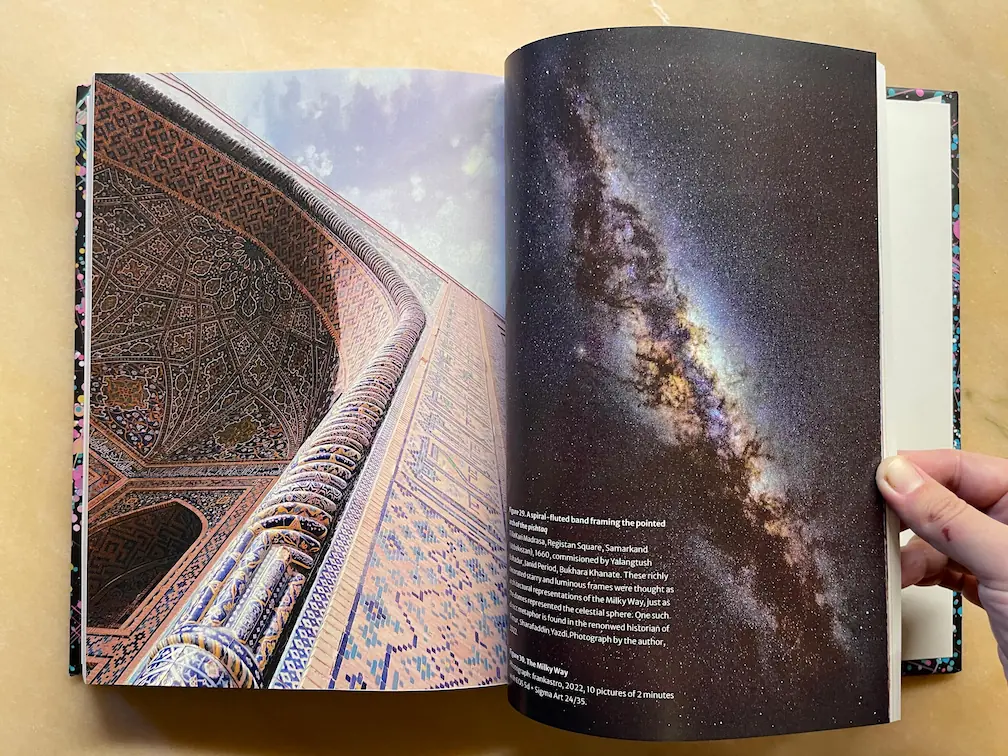
Selected spreads from the printed prototype.
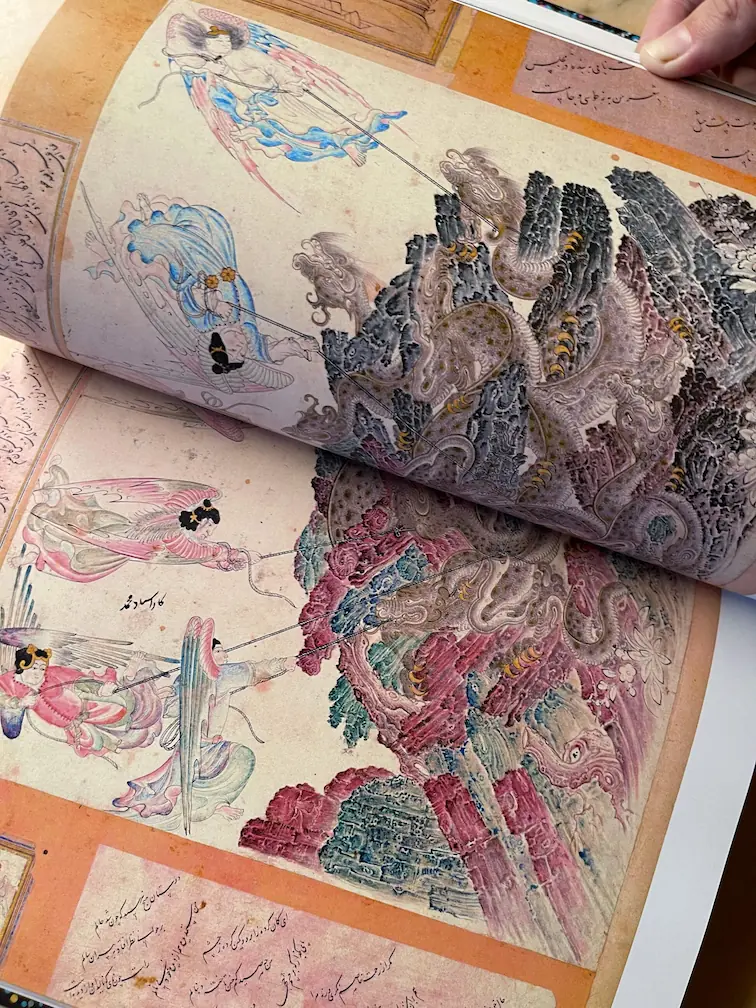
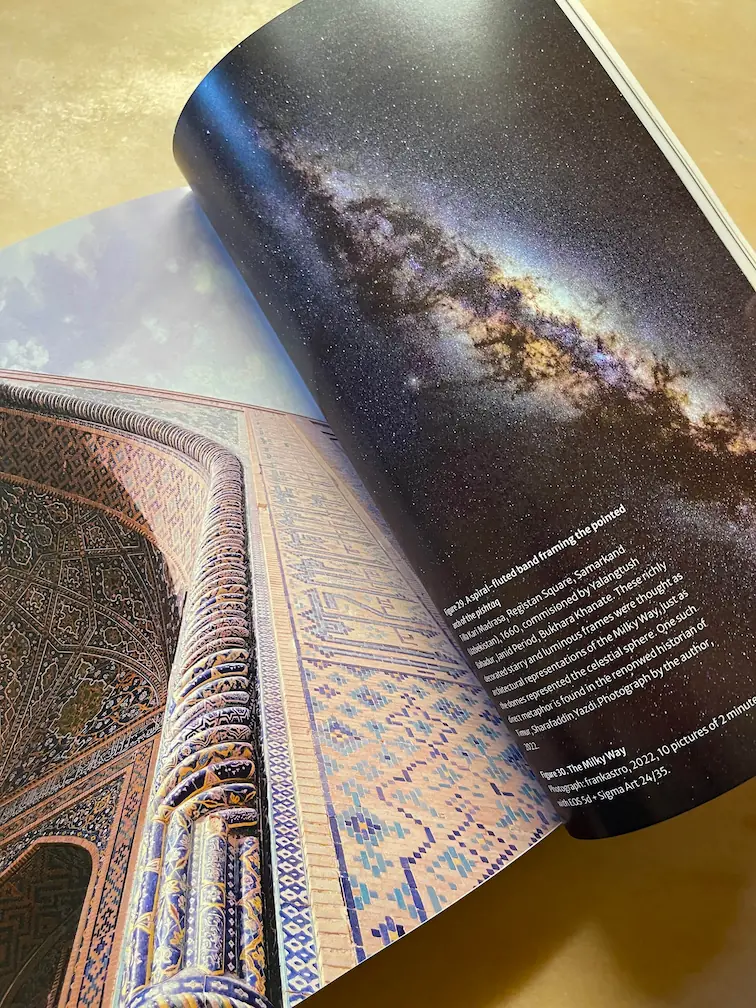
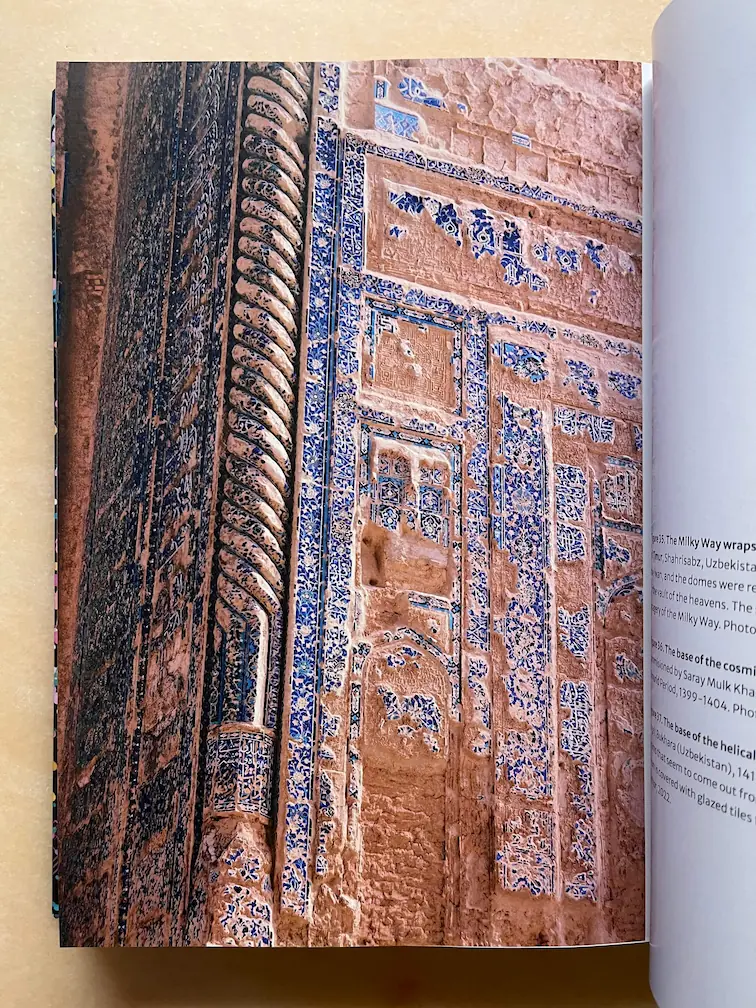
Eastern Winds Book I — page spread 1
Eastern Winds Book I — page spread 2
Eastern Winds Book I — page spread 4
Eastern Winds Book I — page spread 5
Eastern Winds Book I — page spread 7
Eastern Winds Book I — page spread 12
Eastern Winds Book I — page spread 14
Eastern Winds Book I — page spread 15
Eastern Winds Book I — page spread 16
Eastern Winds Book I — page spread 17
Eastern Winds Book I — page spread 18
Eastern Winds Book I — page spread 20
Eastern Winds Book I — page spread 21
Eastern Winds Book I — page spread 22
Eastern Winds Book I — page spread 23
Eastern Winds Book I — page spread 24
Eastern Winds Book I — page spread 26
Eastern Winds Book I — page spread 27
Eastern Winds Book I — page spread 28
Eastern Winds Book I — page spread 29
Eastern Winds Book I — page spread 30
Eastern Winds Book I — page spread 32
Eastern Winds Book I — page spread 33
Eastern Winds Book I — page spread 34
Eastern Winds Book I — page spread 35
Eastern Winds Book I — page spread 36
Eastern Winds Book I — page spread 37